Showing posts with label christmas tree. Show all posts

Wednesday, December 30, 2009

A Christmas Tree Story for Tu B’Shevat


In celebration of this month's Winter Solstice and tomorrow's Full Moon, and in honor of Tu B’Shevat (the New Year for Trees) and the 43rd issue of The Festival of the Trees, I’d like to share this year’s Christmas tree from my home.

Many of you know that most years I like to plant a tree for the winter solstice. This year I cut a small Western White Pine tree (Pinus monticola) to bring inside for our holiday festivities. Our White pine Christmas tree comes with a little story:

This little pine probably sprouted about 12-15 years ago. It was just one among a sea of tiny Western hemlock, Douglas fir, Red alder, Black cottonwood, and assorted wild willow trees. I estimate 12-15 years, because that’s about the time that the land would have been cleared on this property before the house was put in.

The particular spot where our White pine grew happened to be situated right above the septic system and drainage field. Consequently, we have carefully removed hundreds of saplings over the years, usually when they were barely knee-high. We relocated as many trees as possible, but unfortunately some have been sacrificed for the health of our home’s septic system. (As a side note, I’m having great fun learning about Humanure! It WILL be done, oh yes.)

So how did this one White pine remain? I can’t say that I’m entirely sure, but I do know this: around here, the forest knows how to hide things. One day you’re holding your favorite pair of rose-colored sunglasses, they slide carelessly off your nose as you bend down to inspect a lichen, and zzzhoooop! they're gone.

It’s because of the forest’s ability to hide things that I’ll presume this particular White pine chose to remain unnoticed until this year in its full five-meter-high glory. We realized it had grown too big to safely dig around the roots for removal (without potentially damaging a pipe). We decided to honor the tree in the best way the winter would allow.

I used my little bow saw to cut down our tree, and we set it in the front room where it now looks out on the cold ground where it once grew. I’ve never had a White pine for a Christmas tree, but I tell you it’s beautiful – the long needles give it great character, and the big gaps between branches make it easy to see all the ornaments. This tree even came pre-adorned with two great pine cones at the top. The star at the top was made from a shiny paper gift bag given to me by my sister many years ago. Her birthday is tomorrow – HAPPY BIRTHDAY SIS!

Join me in ringing in the New Year as we raise a toast to all the trees we love! I encourage you to celebrate the New Year with the planting of a new tree. Make a wish, set a goal, crack a joke, say a prayer, or do a silly little dance… then put a tree in the earth, and nurture accordingly.


Friday, February 01, 2008

Winter Tree Planting Ideas


I realize we’re well past the winter solstice and holiday season, but many of you are still looking for information about tree planting for your live Christmas trees. Here in Eastern Pennsylvania, I still haven’t planted a tree for the season – the weather, soil, and timing just haven’t been right this year, so I’ll need to wait for the spring thaw. (Tomorrow is Groundhog Day in the US, so we’ll see what Punxsutawney Phil has to say about it!)

Live Christmas trees are an excellent way to celebrate the return of a new year. You can keep them indoors for 7-10 days, and then plant them as soon as the ground is ready (soft enough to dig). If you’re going to bring the tree indoors be sure to keep it cool and moist (but not soggy); watering with ice cubes works well. Take the tree back outside as soon as possible.

If it’s not the right time to plant your tree, just keep it somewhere outside where it gets a little light, but is protected from the wind. Protect the root ball by packing leaves or old hay bales around the base of the tree. (Placing the tree on the leeward side of the house helps too).

When you plant your tree, be sure to prepare the soil wider and deeper than the rootball will reach. Mix in compost to lighten and nurture the soil, and plant your tree just a little high in the hole so that as it settles, it doesn’t sink into the earth. (And remember: NO MULCH VOLCANOS).

The first year of your new tree’s life is critical: be sure to keep your tree regularly watered (but not waterlogged) through the dry months. Your young tree needs to establish a new root system before it can withstand drought on its own.

Fertilize and mulch your tree in the autumn when the water requirements are not as intense and your tree is focused on root development. This will help it grow strong healthy buds for the next spring, and remind you for another year of the return of the sun and warm season after the long, cold winter.

For other ideas about Christmas trees, check out my earlier articles:


Planting Live Christmas Trees for the Winter Solstice

I'm Dreaming of a Green Christmas (Garden Rant)

Deck the Trees with Strings of Berries


Friday, January 19, 2007

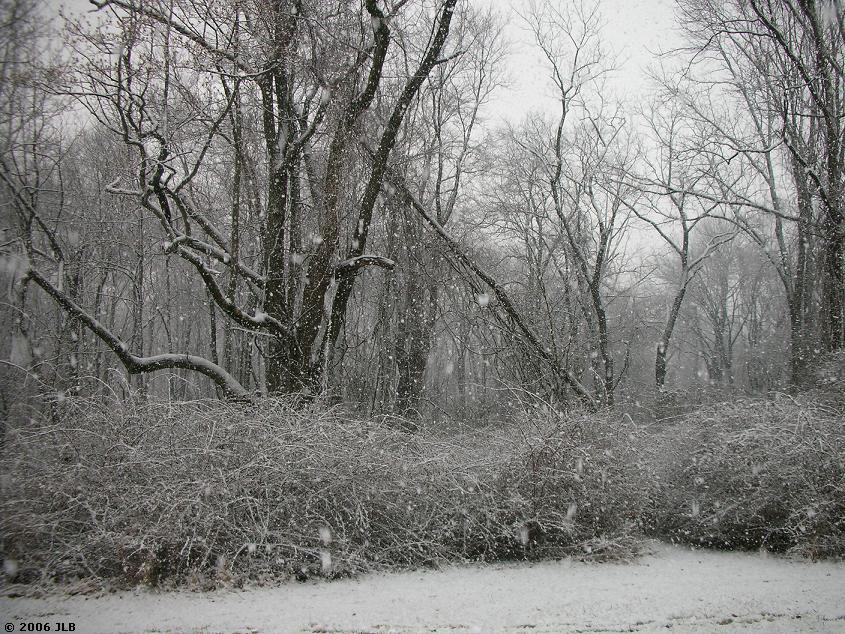
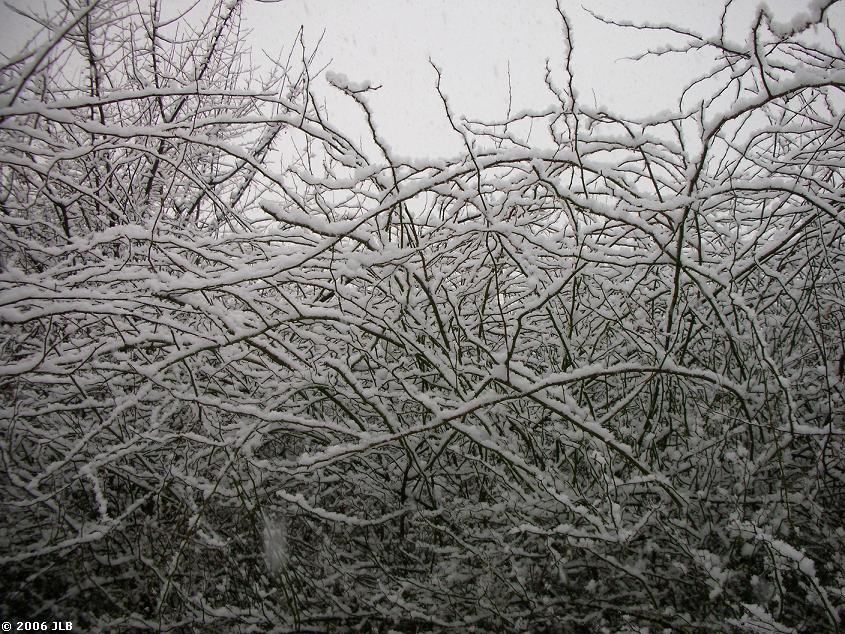
Trees in Snow-dust


Last night, with respect for the new moon, I undressed the Christmas tree we had in the house. It’s rather unusual for us to have a cut tree in the house. Normally, we have a small live tree indoors for a week, which is typically planted by this time.

As you may have read, this year we
planted a Blue spruce, and brought in a cut Fraser fir. So far, the Blue spruce has tolerated the transplant (but the first couple years are the real test).

The biggest surprise was the cut tree we placed in the house. It stopped taking water about two weeks ago, but apart from a little browning at the top of the tree, it still looks GREAT! I am seriously impressed by the longevity and vigor of this cut tree after standing in our home for almost two full months. Now that I've removed all the ornaments, I'll be cutting off the branches and chopping up the trunk to bring it full circle back to the earth.

Among the many trimmings to come off the indoor tree last night were a few strands of popcorn and cranberries. After
the last attempt, I decided to hang these on the two planted Christmas trees this morning in order to increase my chances at spotting the snackers in action.

I also sprinkled bird seed on and around the Eastern white pine outside my window so that I can enjoy the colors and songs of all the overwintering birds. This morning we have a small dusting of snow to show for last night’s flurries. It’s a tease, but I’ll take it!

Friday, January 05, 2007

Deck the trees with strings of berries!


After reading the article Decorate Your Tree with Wildlife Ornaments, I was inspired to have some fun with the two Christmas trees we’ve planted in the yard. I spent a quiet day in December stringing fresh cranberries with fresh-popped popcorn. I painted bagels and pinecones (from the Eastern white pines) with peanut butter, and sprinkled them with wild birdseed (black oil sunflower seeds and a wild birdseed mix).

Once I had a big box filled with goodies, I carefully decorated the Blue spruce and the Oriental spruce in the waning afternoon sun. As I took pictures of my crafts, I drooled at the thought of how cool it was going to be to take pictures the next morning of the birds having breakfast in the Christmas trees!

What I found the next morning was nothing short of hilarious. The trees had been completely stripped of their treasures, with a few dejected strings left hanging on the boughs. A lone pinecone, picked clean of seeds, still clung to a low branch. The hemp twine used to suspend the bagel halves were draped limply around the tree tops.


Alas, no birds were merrily dining on a gourmet breakfast. My guess is that somewhere, a raccoon family was sleeping off a very good night!
***
EDIT, FOR THE BIRDS: Trailhead asked about feeding peanut butter to birds in the comments, and I realized that others might be curious too. So here’s a little more information on feeding peanut butter to birds:

Trailhead, I too was uncertain about the peanut butter. I struggled with the “everybody does it” theory. (I also meant to note that after putting out all the treats, I added a large, clean dog food dish filled to the brim with fresh water beneath the tree closest to the thicket).

With regards to the peanut butter, perhaps this will help:

Source: 101 Ways to Help Birds by Laura Erickson
© 2006 Stackpole Books

Chapter 12: Bird Food Recommendations, page. 148

No. 47: Offer peanut butter and nuts

Peanut butter is nutritious and has a high energy content, so it is often a component of bluebird mixes. The easiest way to offer it is smeared into the crevices of tree bark or stuffed into the holes of hanging log feeders. […] In his book A Complete Guide to Bird Feeding, John V. Dennis reports cases of birds choking on peanut butter. Because of its sticky texture, it can gum up their mouths, so mix peanut butter with a generous amount of cornmeal to make it grittier.”


There are lots more ideas available in Erickson’s 101 Ways to Help Birds - I highly recommend it! I first learned about her book through a review at Bootstrap Analysis: book review: 101 ways to help birds.
For all you birdlovers who want more, more, MORE, Laura Erickson also keeps a blog called the Birder Blog.

Saturday, December 16, 2006

More on Christmas Trees

To continue our current discussions on Christmas trees, I thought I’d share a couple more things which have crossed my path:

First,
Bill Gladden forwarded the following from the Pennsylvania Department of Agriculture weekly newsletter, Inside PDA:

***

"Did You Know?


PA ranks first in the nation with 2,000 Christmas tree farms and ranks 4th nationally in cut trees with 1.7 million and 4th in acres of production at 45,000. Christmas trees contribute $13.9 million to the state's economy."

***

And
Trailhead has a discussion on more of the agricultural aspects of Christmas tree farming (including a not-to-be-missed video captured by Mr. T of the harvest in progress) in her post, O Fir Tree Dark. Check it out!

Also, remember that there is still time to submit your entries to the Festival of the Trees 7, to be hosted by Jeremy at The Voltage Gate. Submissions deadline is December 30, 2006. Send all submissions (including post title and URL) to Jeremy by email: thevoltagegate [at] gmail [dot] com. Be sure to put "Festival of the Trees" in the subject line.

Want to join in the fun? If you like trees, you may enjoy becoming a host for a future issue of the Festival of the Trees. To learn more, check out the Festival of the trees coordinating blog and the Volunteer to Host page.

Friday, December 15, 2006

Guest blog at Garden Rant: Christmas Trees

I have been invited back to guest blog again at Garden Rant and share some thoughts on Christmas trees.

You’ve read my thoughts from earlier this week on live Christmas tree planting, now you can see what I have to say about cut trees too in my article
I’m Dreaming of a Green Christmas.

Thank you again to Amy Stewart, Michele Owens, and Susan Harris for inviting me to share my thoughts with their readers. Rant on ladies!

What's ahead at Arboreality:

Yesterday I spent my afternoon exploring local preserves and interviewing Bill Gladden, Director of the Department of Open Space Preservation in Chester County. Next week I’ll be sharing what I learned, with plenty of pictures too!

Wednesday, December 13, 2006

Planting Live Christmas Trees for Winter Solstice


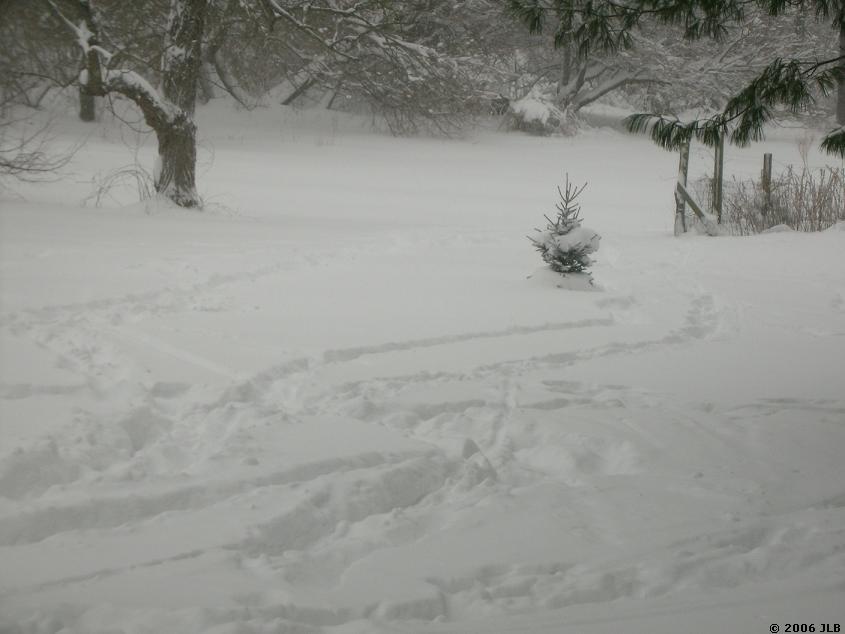
Each year we plant an evergreen in our yard to celebrate Christmas and the Winter Solstice. Last year, we squeaked into our new home in Pennsylvania on December 23rd, which gave us enough time to find a nice, live Oriental spruce on sale for half-off at a garden shop to celebrate in our empty but cozy new home. You can see its amazing progress in the third image above.

This year, we decided to go hog wild! After searching for local farms, we visited Linvilla Orchards and all their many farm pleasures – complete with chickens, goats, a wall full of preserves, and hayrides.

While we opted out of the hayride, we were positively smitten by the Christmas tree selection. We purchased a large, cut Fraser fir to bring in the house and decorate, and a lovely Blue spruce to plant in the yard. Live trees can only stay in the house a few days in order to stay healthy, and we wanted to have a tree indoors all month long for once.

We planted our Blue spruce on December 2nd when the moon was almost full in earthy Taurus. You can see it above in the top two images. It's about 20 feet away from last year's Christmas tree, giving both ample room for lots of healthy growth.

There are many websites out there offering tips for proper care of a live Christmas tree. Below are a few of the better ones (feel free to recommend others):

--Care Tips for a Living Tree

--How To Pick (and take care of) A Live Christmas Tree

--Live Christmas Trees

--9 Things You Should Know About Trees

And you don't want to miss this totally cool article with tons of ideas for combining Yuletide decorations with wildlife good will:

Decorate Your Tree with Wildlife Ornaments!

I thought that in addition to those resources, I might offer you a few of my own personal tips on caring for and planting a live Christmas tree:

1) Select a tree you love

If you’re going to plant this tree in your yard, plan for the long-haul.
We usually like to just pick the tree that sings to us, but we also have lived in places with lots of growing room. This tree is going to be with you a long time, so if there are concerns about placement, hardiness, etc., take a little time to learn about the tree you’re bringing home, and make sure it’s one you’re going to like to look at for a good, long time.

2) Remember it’s alive… in the dormant season

Evergreens are strong trees. In the winter of the Northern Hemisphere, these trees are going to be quietly preparing for next spring’s growth. That means that all those little nubbins you see on the tips of each branch are the promises of the tree’s future. All the growth to come depends on the health of those seemingly innocuous little buds.

Apart from taking care to be gentle with your tree, you want to ensure that your tree doesn’t think it’s suddenly taken a winter vacation in the tropics when it enters your home. We all like to stay warm in winter, but common sensible things like tree placement and moderate thermostat settings can make all the difference in the health of your tree.

Your tree needs to be watered. Help to keep your tree cool by watering with ice cubes. The ice will melt slowly on the top of the soil/root ball, helping reduce the tree’s overall temperature.

3) THIS END UP ^ ^ ^

Trees are heavy creatures, and when you bring home a live one, it’s going to come with a healthy root ball with some earth, either potted or wrapped (usually in burlap). Not only do you need to be careful with moving your tree, but you need to use common sense again when it comes to lifting. A handtruck/dolly or wheelbarrow can lend a helping hand if you don’t have a second person to help you move your tree in and out of the house.

Placement leaves you with several options, like a decorative pot, but most important is a solid, sturdy plastic tray beneath the tree’s pot. Like any potted plant, you want your Christmas tree to have good drainage so that it doesn’t just sit in water and rot. A sturdy, WIDE tray beneath your tree will help protect the floors, and also allow you to add additional ice around the base of the tree if desired to further assist in keeping it cool.

4) Planting time!

The longer you keep your happy little tree indoors, the greater the chances that you’re going to confuse it into budburst. You want your tree to remain dormant, because this is just the start of winter! Don't keep your live tree indoors for more than 7-10 days maximum.

In Washington State, I rarely had to worry about the ground being frozen in December. But here in Pennsylvania, I was lucky to squeak in by December 2nd, since the ground froze a week later. If your ground is frozen when it comes time to plant, you still need to get the tree outside.

Place your tree somewhere that it’s protected from the wind. While cold is a consideration, it’s actually the winds that really kill plants in the winter. Choose a naturally-sheltered area like the side of the house away from the prevailing winds. Wrap the pot/burlap/root ball with additional protection – hay, mulch, tarps, even old blankets. The rest of the tree needs to be exposed so it can breathe and take in the light. As soon as the ground thaws, you want to plant! Be sure to check the root ball periodically to make sure it doesn’t dry out.

Now, when it comes time to plant, I’ve got a few other notes from personal experience. Most people and sources will tell you NOT to unwrap the burlap, NOT to remove the old earth, and to plop it in the ground as is (after proper soil preparation). I’m here to tell you that I disagree completely.

Not all trees make it, so don’t let one year without success deter you from trying again. The second Christmas tree we planted did not survive after almost a year of apparent health. When I pulled out the dead tree, I found that it was completely bogged and choked in the burlap.

I now always remove the burlap from my trees, and I always GENTLY loosen the earth around the roots. It’s likely that this is not recommended because too much damage to the delicate, fine roots can mean death for the tree. Make sure that your root ball is nice and wet, and take your time. Remove the big solid chunks where possible, but do not pull away the small, thin roots. Leave on any chunks that don’t come off easily. Gently spread apart the bigger roots to get them out of the pot/ball shape, and encourage them to spread.

Finally, don’t plant too low! The earth is going to settle once the tree is in the ground, and you don’t want your tree swallowed up. Try to mound the earth so that the tree sits a little high at planting. As it settles a few inches, it will come flush with the ground level. And in case I haven't said it before - just say NO to the mulch volcano!

5) Long live the trees

Depending on where you live, your tree may be satisfied with winter rains for water. However, once the ground thaws and the days get warm, you need to water your tree regularly, especially during the first year as it establishes itself in its new home. Consistent, deep, weekly watering is helpful to encourage strong taproots and healthy growth.

Your tree has been sculpted to match the Christmas tree shape, but once those buds burst, that’s all over. Your tree will become the quintessential ungainly teenager as it tries to grow out of its cultivated shape to blossom into its true identity. Have patience the first few years as your tree slowly comes into its own with new growth. Don’t be alarmed if there are a few lost twigs, a few dead buds, or a loss of the leading branch. Other top buds will eagerly compete to become the new tree top, and the tree’s inherent nature will take care of the rest.

If you have any questions about live tree care and planting, please feel welcome to ask in the comments, and I will do my best to answer with what knowledge I have.

Happy planting!

Thursday, May 18, 2006

Maples, Moon, Mulberries, and Mysteries


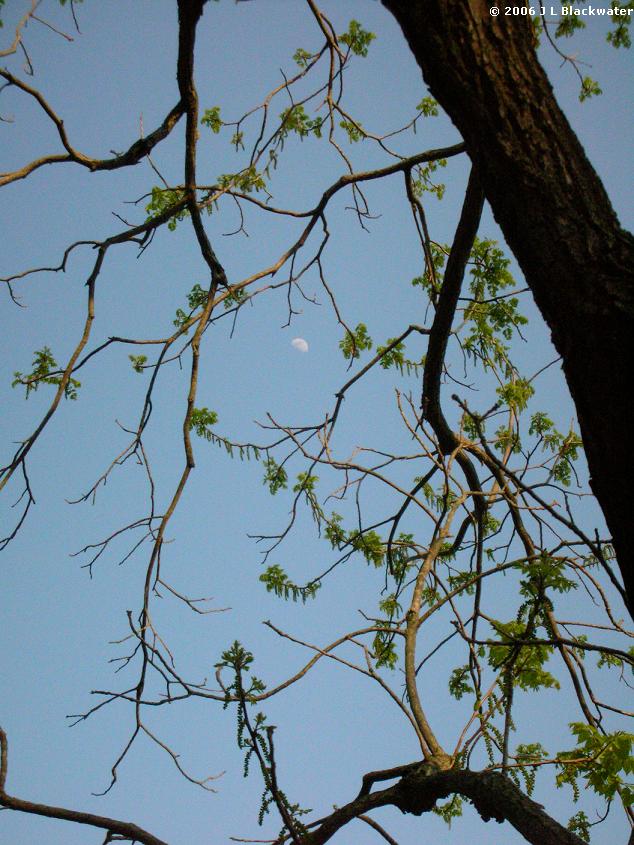
Good morning! Here are some of the dawn’s catch, including our waning moon framed by a silver maple (we’ll investigate the silver maple more closely in a separate post).

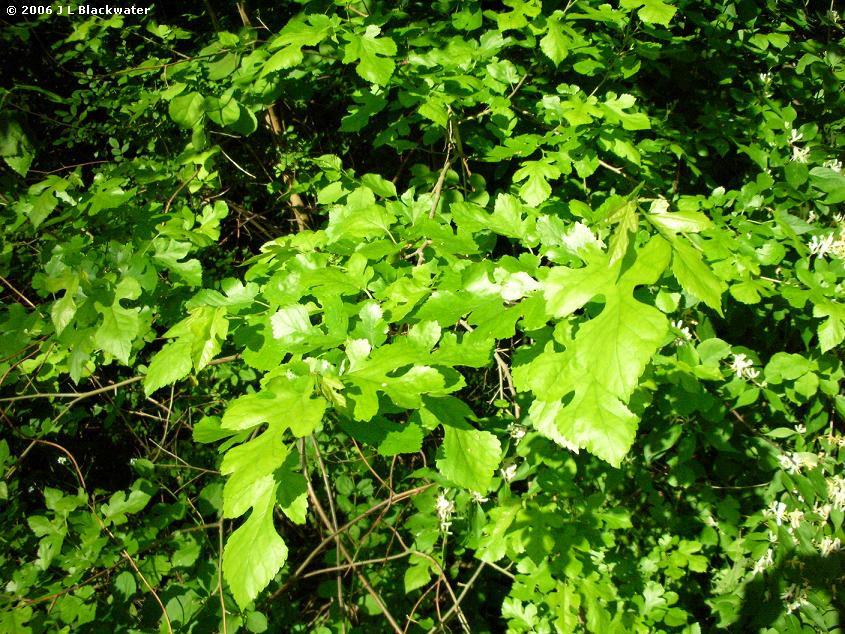
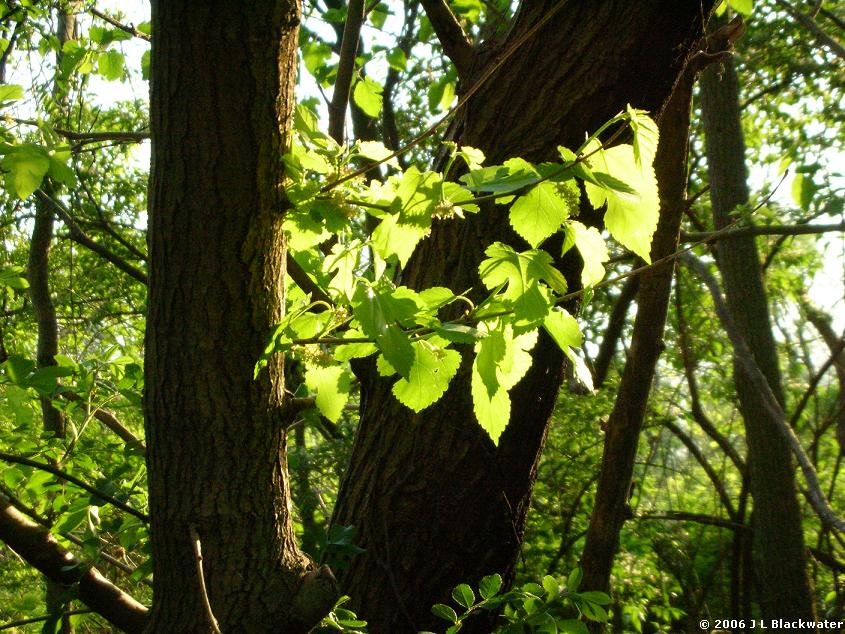
The second image is what I believe to be another variety of mulberry (so far I believe that there are at least two if not three or more types of mulberry trees growing around here). Based on the leaves, I believe this to be a white mulberry.

The third image is of the type of mulberry growing next to the cottage. This might ALSO be called a white mulberry, or possibly a red mulberry. I’m going to have to do some research to help learn the difference between them.

I’m still planning to show you more about the really great mulberries growing by the cottage. We’re also still working on the unidentified-possible-mulberry-possible-something-else tree (which might even be a quaking aspen) from a couple weeks ago. Zut alors! So many trees, so little time!

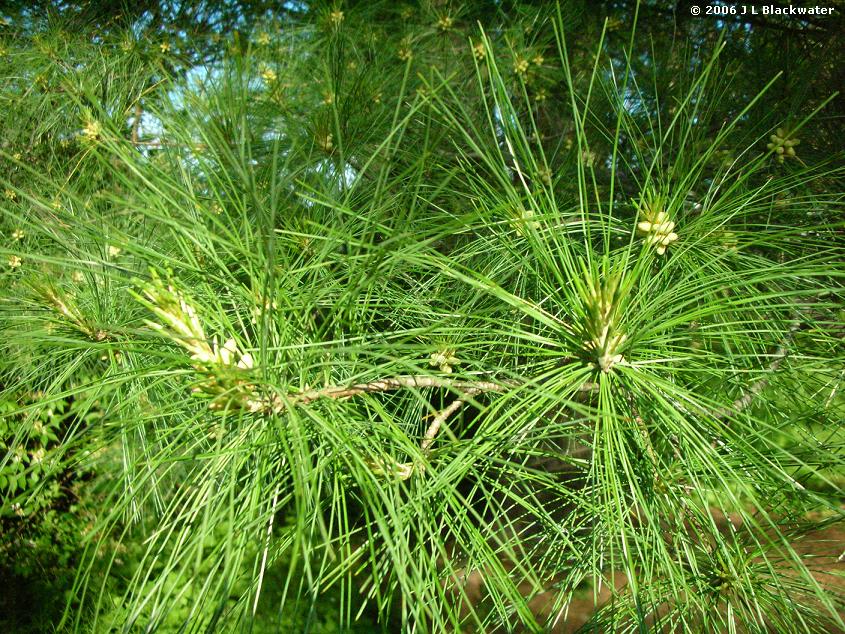
Also, remember the mystery tree from January that turned out to be an Eastern white pine? Not to be out done, the evergreens are in blossom as well which you can tell of the Eastern white pine seen in image four, and the oriental spruce Christmas tree I planted in January seen in image five.

Finally, we’re still working on the identity of the mystery tree seen in the final image. I wanted to share another update on its progress – it’s really filling out nicely!

Hmmm… so much for focusing more on my work and less on my tree blog!

Saturday, May 06, 2006

Moon over black walnut


This evening gave us a cool breath of air, and the hope of potential rains to come. I hesitate to mention it for fear of scaring it off! As the sun was setting with the moon at its zenith, I stepped out to capture a few images to share.

Our top image gives you a glimpse of the blossoms on the black walnut tree I’ve shared in the past. We’ll see more of it next week along with several others.

The center image is the first green bud to emerge on the Christmas tree we planted in January, which is an oriental spruce. She’s lost a few needles along the way, but with some water and care, I think she’ll do just fine!


Finally we have a glimpse of sunset light on tree leaves... a lovely way to end the day.

Sunday, February 12, 2006

En hiver...


We have over 14 inches this morning, and the snow is still falling! We have been trying to build snow people, but the snow is just too powdery!

Happy full moon everyone!

Friday, January 27, 2006

Happy New Moon, Happy New Year!


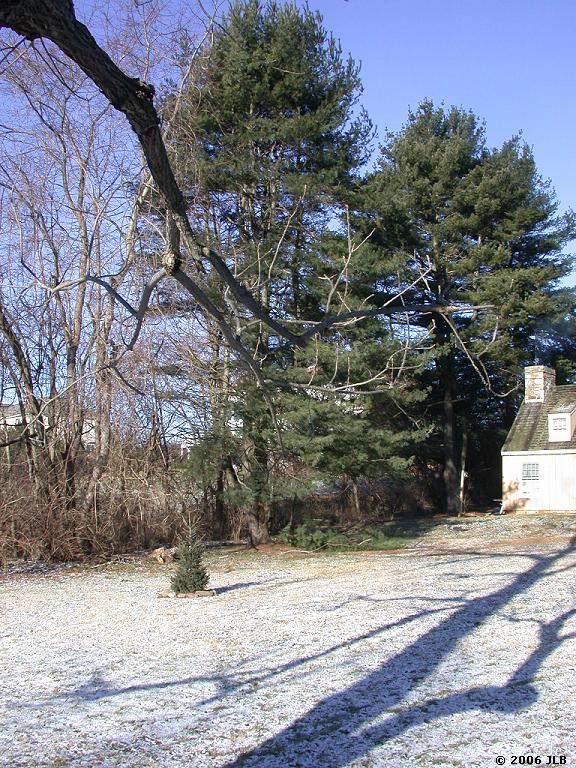
Here you can glimpse a bit of the shadow I mentioned of the mystery tree, and one of its branches in the foreground. Beyond it you can see the Christmas tree, and a corner of our cottage.

Next week we’ll be exploring the large evergreens you can see next to my home. They grow in a way unlike any other evergreen I’ve encountered before, as you too will see when we visit them from many different angles.

This Sunday January 29th we’ll experience the first new moon of 2006 in Aquarius, which also marks the new year for many cultures. Best wishes and fresh starts to you all!

Monday, January 16, 2006

O Tanenbaum


We celebrated the Winter Solstice on the road, but squeaked home just before Christmas Eve. This allowed us time to get some much-needed food (no…more…fast…food…!!!), and to get ourselves a lovely Christmas tree!

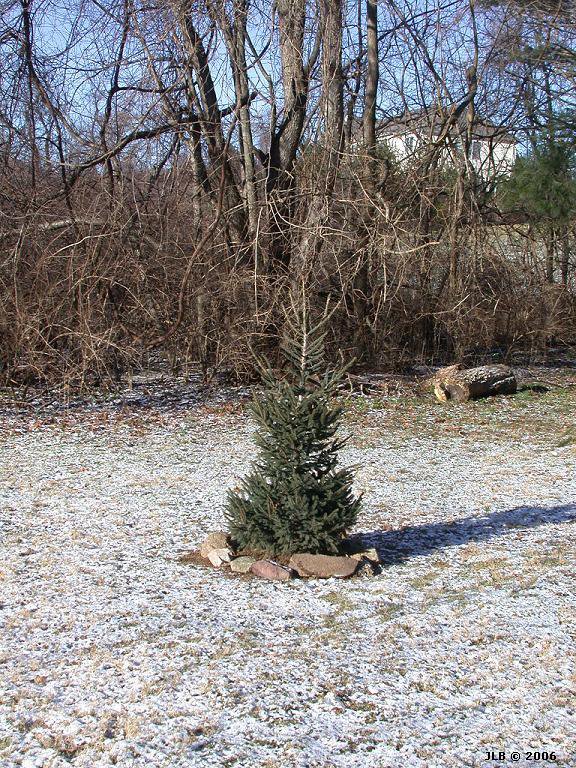
Here you see our “oriental spruce” happily planted in our new front yard. We got lucky, and had a few warm days which thawed the earth right about the time I wanted to plant. I do my best to follow lunar cycles for planting/gardening, and put this one in the ground during the Pisces phase of the New Moon. Seen behind it are some of the older trees around our home that we’ll be exploring in the coming months.

One of my favorite parts of planting our Christmas tree each year is watching it grow out of its pruned-Christmas tree shape, and into its own natural form. Now that I’ve seen how great it looks in the ground, it’s sooo incredibly difficult not to want to plant the heck out of the whole surrounding area. However, I do believe that I will have to wait for the Spring!


By the way, did you catch a glimpse of our first full moon of the year this past weekend? Woweeee! What a beauty! Even if you couldn’t see it, you certainly must have felt it!