Showing posts with label fruits. Show all posts

Monday, November 10, 2008

Greeting the Guava Tree


The arrival of our subtle, southern California autumn was heralded these past few months by the soft percussion of hidden guava fruits raining on the path. This happy, fruitful little guava tree is the first to greet me each morning at the front gate.
The Santa Barbara Independent recently published an informative article about two species of this small, unimposing fruit tree: strawberry guava, and pineapple guava, which grow in gardens around the area. The tree you see here is the pineapple guava variety Acca sellowiana, formerly Feijoa sellowiana.

Sunday, September 28, 2008

Love Affair with the Santa Barbara Moreton Bay Fig Tree

And then I saw you, silhouetted on the sidewalk.


Like a thousand eyes watching, no part of me left unseen.


Limb by limb, shoulder by shoulder, learning you petal by petal.


Snake-like and certain, our tongues smell earth, breeze, ocean mist.


A fence may stand between us, but I still feel your electricity;


gaze on your sweet under-places luminous with sunrise.


I reach up as you reach up, bend back and breathe in;


shimmy in the warmth of new day and clap, extend a fresh leaf on each bright finger.


I take pictures of your curves so I can stare at you alone, smooth my finger along forbidden branches; sigh.


Your infinite patience dwarfs me. I leave you smaller than I began.


Quietly I admire your persistent fruitfulness, your marriage of mathematics and magic.


We listen closely together to hear above the highway, small moments flicker as shadow follows shadow.


I want to sit back to trunk with you; exhale, close my eyes and wait for understanding.


* * *


© 2008 Jade Leone Blackwater


For The Festival of the Trees 28: Art and Arboreality


October 1, 2008.


The Festival of the Trees is a monthly blog carnival hosted at a different blog each month. The theme for the Festival of the Trees 28 is "Art and Arboreality", which will be published on Wednesday, October 1, 2008.


I'm still accepting a few late entries, so if you would like to participate just follow these three easy steps:


  1. Let a tree inspire you today.


  2. Share your creation at your blog.


  3. Email me your submission: jadeblackwater [at] brainripples [dot] com.


PS - Special preference given to all you fortunate folks seeing those beautiful autumn colors!!! Won't some kind, northerly blogger send me a sumptuous sugar maple in autumn color?

Sunday, March 02, 2008

Festival of the Trees 21 Orchards and Fruits Edition Now Online at Orchards Forever


This month’s Festival of the Trees 21 is a special fruit and orchard edition hosted by Peg at Orchards Forever. You’ll be sure to enjoy this delicious selection of unique and tasty blog posts. Peg’s thoughtful edition of the Festival of the Trees is well worth the read. Fortunately for us, today’s Festival begins on a Sunday. Enjoy a lazy stroll through the orchards!

To
volunteer to host a future festival, and to submit blog posts to future festivals, visit the Festival of the Trees coordinating blog.

Wednesday, November 28, 2007

Book Review: The Curious Gardener’s Almanac

The Curious Gardener’s Almanac: Centuries of Practical Gardening Wisdom, by Niall Edworthy

The book for today’s review was provided by: Perigee Books, Penguin Group (USA)


At Arboreality I like to share the joy of discovery by bringing you glimpses of the trees and plants in my corner of the world. Niall Edworthy echoes this spirit with his new book, The Curious Gardener’s Almanac: Centuries of Practical Gardening Wisdom.

In his introduction, Edworthy attempts to wrap his arms around this book and explain the “what” and the “why” to little avail. Perhaps I can lend him a hand: this book is itself a garden.

The Curious Gardener’s Almanac is essentially a book of happenstance. As in a garden, you wander the pages and find yourself distracted by flowers of thought here, nuts of wisdom there, and all the while cognizant of the dark earth that engenders such a wealth of gardening wisdom.

Rather than chapters of how-to’s and when’s, Edworthy’s pages are filled with bits of poems, quotations, advice, facts, proverbs, and parables. Edworthy is not a condescending gardening guru, but like so many of us, he is a man with a basic curiosity about his garden, learning literally from the ground up.

As a self-taught gardener, I giggled with recognition when he explained the most unfortunate fate of his onions: rotted to death when left out to dry… in the rain. Those of us who did not grow up with gardens typically lack the innate wisdom of how to manage a thriving garden. What Edworthy shares with us is that not only is this wisdom not lost upon us, but that we can all find a spot of green on our thumbs if we just keep shoving it into the dirt.
Creating a garden is never an instant transformation – nor should it be. In Edworthy’s introduction he confesses, “The first year in the vegetable patch was a perfect disaster—I just scattered a variety of seeds over it, expecting it to turn into the Garden of Eden by the end of summer, like it does on the TV.”
Therein lies the deepest wisdom of all: gardening is never a process to be finished. It is an ongoing process of learning and growth of which we gardeners, proficient and novice, are a part. Edworthy’s book includes accessible advice on gardening in each season. I found it refreshing that he includes information both contemporary (like why you don’t need to water your lawn), and traditional (like companion planting and uses for herbs).

This book is like a happy little backyard garden: tangible, unassuming, nourishing, and meaningful. The Curious Gardener’s Almanac is not a reference book—it is a book of discovery. Flip through its pages, and what you’ll find is a chorus of shovels and rakes, plucking at the earth to see what comes up.

Monday, November 19, 2007

Autumn Rains


The Philadelphia area is being blessed with rains this week, and the Farmer’s Almanac suggests that we may have snow in our near future. Certainly the deer are aware of the coming cold: they’ve all donned their grey winter coats.

With the late summer, Philadelphia is still seeing lots of color in the trees. In fact, Jesse Milton of the Trees News blog has observed some excellent autumn color in Atlanta, Georgia. Soon Pennsylvania will be grey and brown all over, with small patches of pink and orange where the young beech trees still hold their leaves (a process called leaf marcescence – some oaks and other trees do this too).

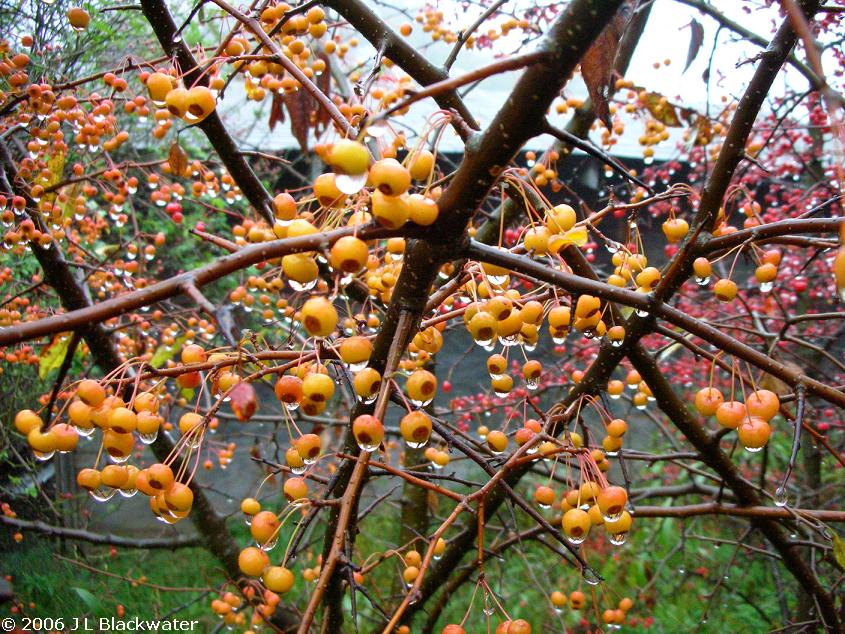
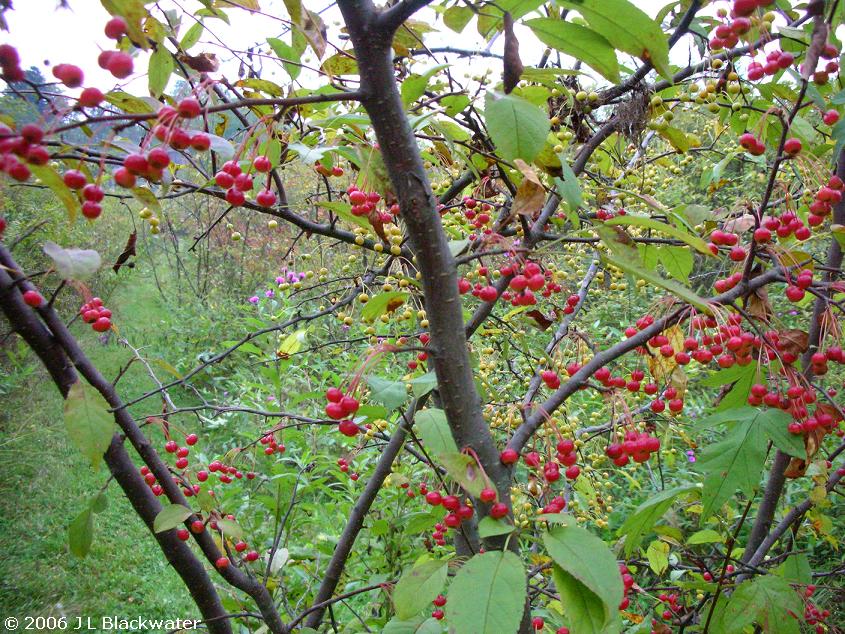
Today’s images include two staples of the local winter bird diet: pin cherries (Prunus pennsylvatica), and multiflora rose hips (Rosa multiflora). As the cold sets in, these tiny fruits will be stripped from every branch by a variety of small birds. These small birds constitute much of our passing winter color (unfortunately birds, unlike trees, can fly away from my camera).
Until then, enjoy the show – Pin cherry trees are one of my Pennsylvania favorites.

Thursday, June 28, 2007

Green Summer Pin Cherries


Anita Marie Moscoso recently commented that pumpkin plants in summer remind her of the autumn that is soon to come. Being a fellow autumnophile (and all-around-pumpkin lover), I know precisely what she means.

These pin cherries (Prunus pensylvanica) are another echo of the future: when the tired summer finally breathes her last, these cherries will sing the autumn into splendor with the first bright colors of the season. Also called the Fire cherry or Bird cherry tree, these small, colorful trees are among my favorite early Pennsylvania discoveries.

Tuesday, June 12, 2007

Mulberries Up Close and Juicy


These three pictures (taken yesterday) are of a single mulberry tree growing next to my cottage. It is one of several trees which I originally believed to be Black mulberry trees (Morus nigra), and given Sam’s helpful info on how to distinguish mulberry trees (which I reposted yesterday), I now believe that my first hunch may have been correct.

These trees, while shade tolerant, appear to prefer full sun when they can get it. This particular specimen only gets sun in the evening (which is when these images were taken). They all have the leaning trunk Sam mentions, and the strongly cordate leaf shape. While some of the leaves occasionally have two or three irregular lobes, most do not.

And, as we can see in these pictures, the fruits ripen to a deep, dark purple. My friends the catbirds (Dumatella carolinensis) are busy in these trees right now, and the deer are right behind them!

Friday, October 20, 2006

What's that? You want more pin cherries?


I can’t help it – I just adore the pin cherries! They brought some of the first glimpses of autumn color this season, and they continue to brighten my days.

Here I was this morning, trying to comb through the overload of pictures I have to share with you, and what did I do? I took my camera out for my morning walk, and came back with another 150 images to work with! Sheesh.

I couldn’t decide what to share from the morning, so I figured I’d just give you some pin cherries (Prunus pensylvanica) for a Friday smile. All the lovely rain from last night gave us a beautiful misty morning - perfect for a walk in the woods.


Remember my thoughts on the “Pennsylvania Red” from when I first moved here? Autumn only reaffirms the natural expression of red in this land.

More to follow!

Tuesday, September 26, 2006

Course by Color

Last weekend I captured some 260 pictures at Longwood Gardens. This left me in a bit of a quandary as to where to begin sharing here at Arboreality.

So, I decided to start at the beginning, and just walk you through the gardens and forests as I did.


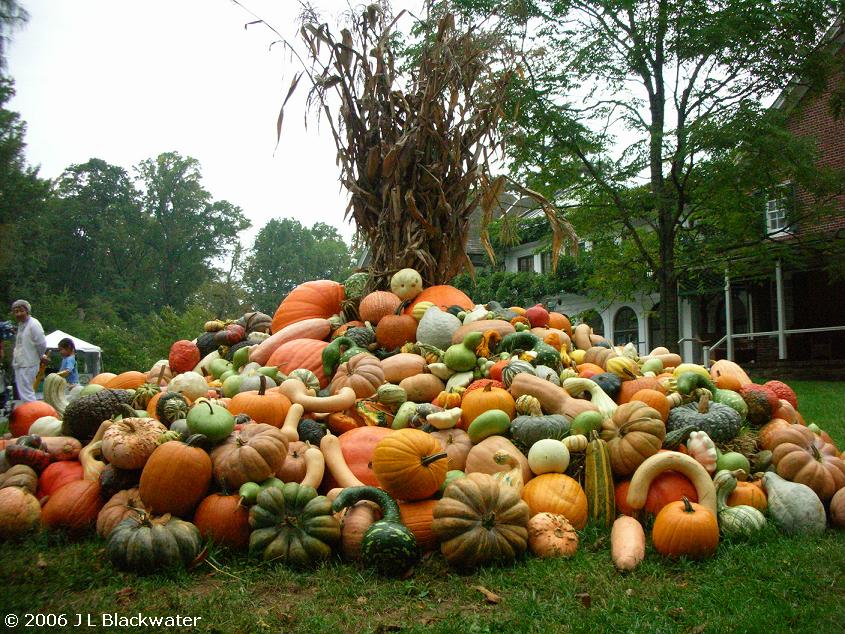
Pumpkins adorned the gardens to celebrate the season, and this pumpkin display was just plain awesome. I know that the kids visiting the gardens felt just as I did.


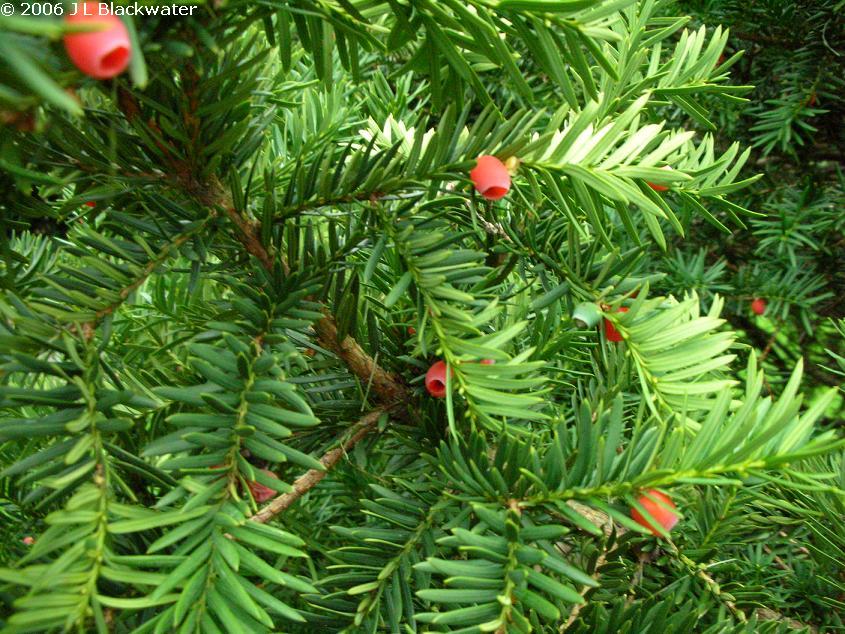
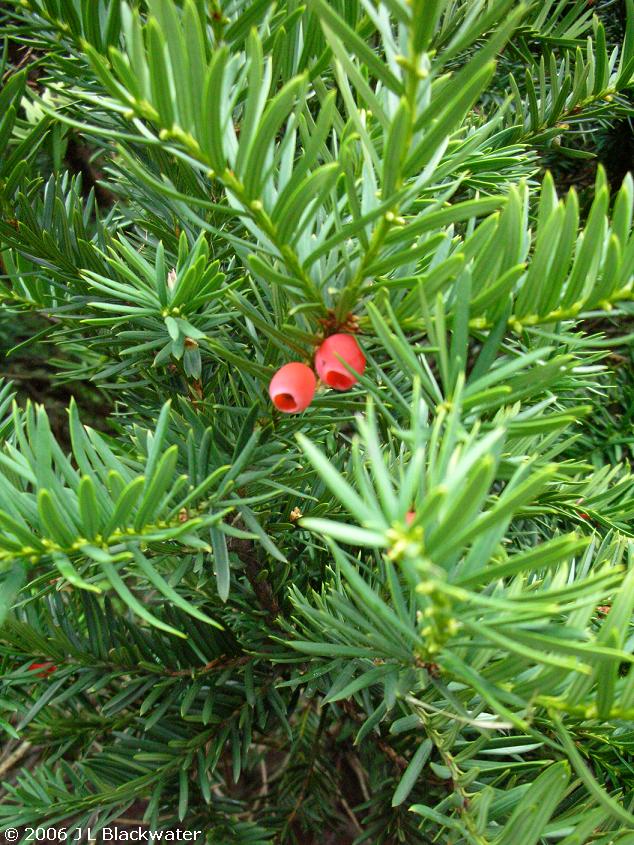
The first tree pictures I took were of the Yew tree, of the family Taxaceae. I believe this to be a common Yew tree (Taxus baccata), but owing to my excitement, I failed to take the time to look at the tag.

Throughout the gardens, the trees, plants, and flowers are marked with tags identifying them by common and scientific names, families, and sometimes other bits of information. Now, if I’d been smart about things, I would have taken a picture of each tag along with each tree to create a sort of catalog.

Unfortunately (or perhaps, fortunately) I was so incredibly smitten with all the green, growing life around me that I often forgot to take the time to look at tags, let alone photograph them.


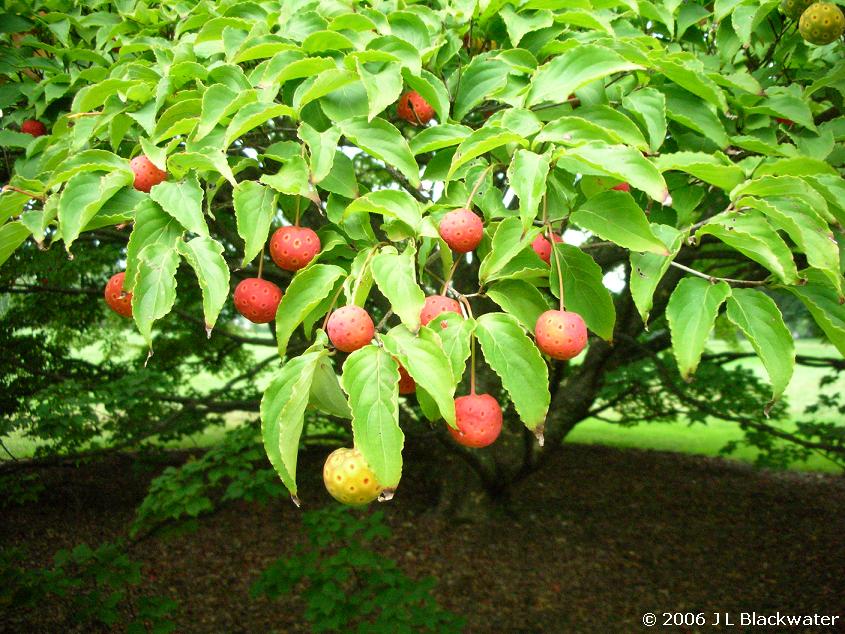
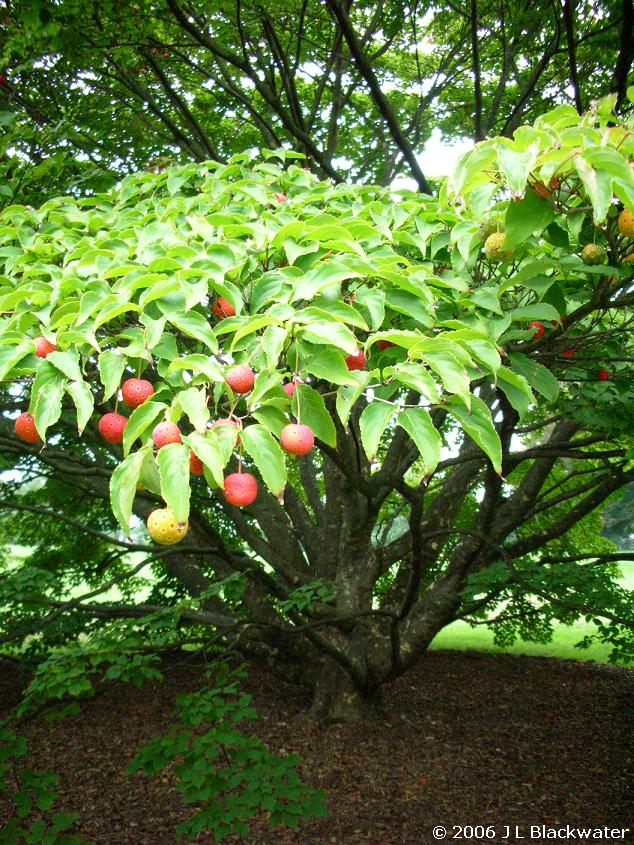
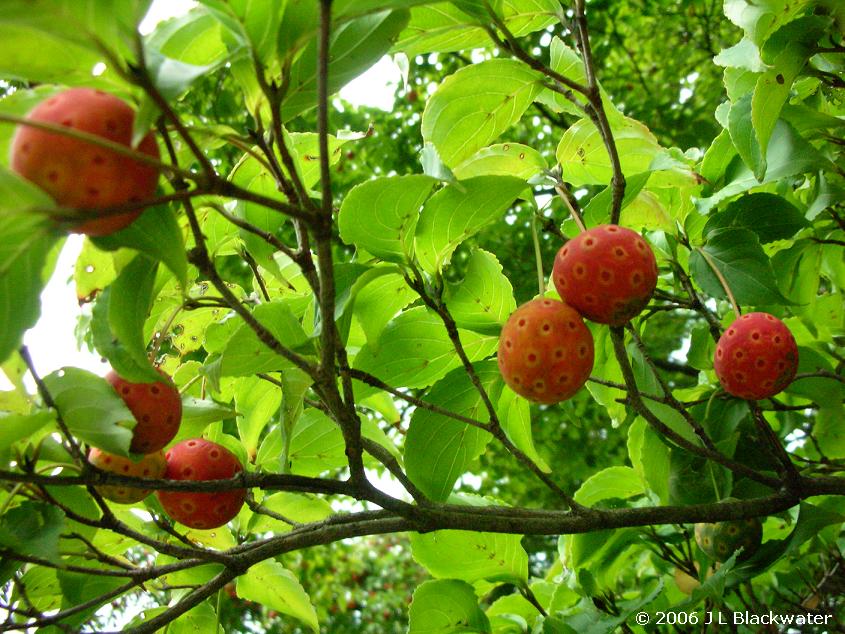
Which leads us to our first mystery tree from Longwood Gardens, which I’m sure is not a mystery to anyone who took the time to read the tag. Certainly you can see how I was distracted by these spotted, cherry-like fruits!

As always, if you know what we're looking at - don't be shy! Tell us!

Tuesday, September 19, 2006

Local Harvest


Some of you know how unabashedly covetous I have been this season of everyone else’s beautiful autumn harvests. While I was unable to put in vegetables of my own this year, I have nonetheless enjoyed the fruits of others’ labors in the form of tomatoes, onions, herbs, and more.

Over the weekend we drove out to a local farmer who sells eggs out of his driveway by the dozen. We’d never met the man before last weekend – in fact, it was sheer luck that we even found his little nook while out exploring one Sunday afternoon in spring. He keeps a styrofoam container filled with eggs with a little cash box near by. The eggs are always delicious.

When we arrived last Sunday however, we were pleasantly surprised to find an amazing array of vegetables and fruits displayed along the driveway in addition to the eggs. If PAL hadn't been there to stop me, I may well have come home with at least one basket of each item he had – which would have put me in the neighborhood of twenty baskets or more.

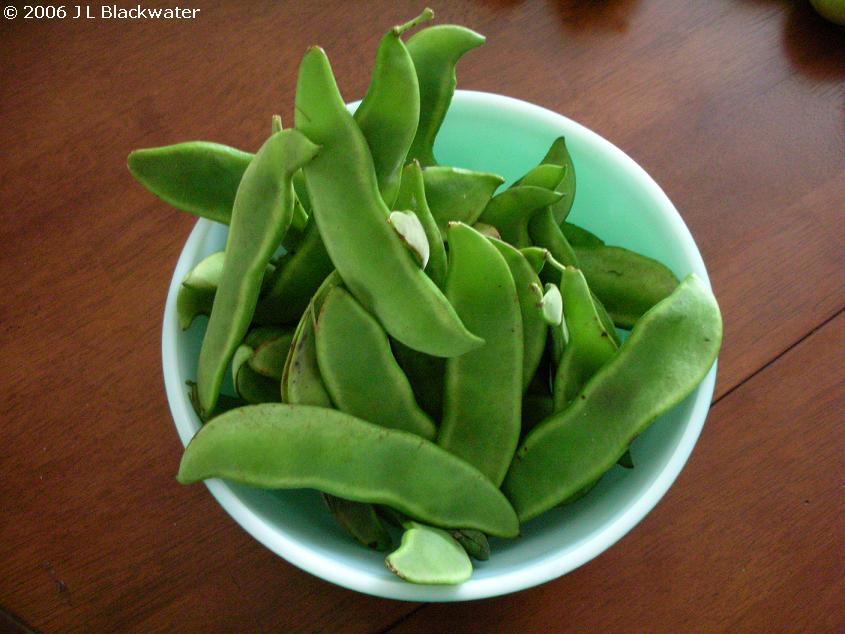
The apples, peppers, and lima beans you see here have been delicious. I'll have to add pumpkin pictures later when the sun rises. We came home with so much that I was able to divide up our catch among the neighbors and still have enough for a few meals of our own. Tonight: either chile casserole (a new recipe I found online), or chile rellenos (the ol' reliable).

I hope that you are all enjoying the autumn harvest!

Friday, September 15, 2006

Japanese Snowbells


NOW I know why these trees are called Japanese snowbells! If you look back at our first posts on the Japanese snowbell trees (back when they were still mysteries), you'll see the delicate flowers which graced this beautiful tree in the spring.

Today is another wonderful day of rain, which is just what this Seattle native ordered. And guess what I found while I was exploring? Another branch of the stream! I have so much to share!

Thursday, September 14, 2006

First Colors of Autumn


The pin cherries are the first trees to give us autumn colors at the farm with their ripening berries. Yesterday I saw the first few trees turning their leaves - we have some exciting days ahead here at Arboreality!

J'aime l'automne!!

Tuesday, September 12, 2006

Red Squirrel and Butternuts


Today’s story begins last winter, when we first arrived in Pennsylvania. Eastern Pennsylvania winters have a different kind of cold from Western Washington winters, and one of the first things we did was go about securing some wood for the fireplace.

The friendly folks at Bradley Tree Experts were happy to deliver us cords of pre-split wood (since our stash of wood was back in WA keeping the neighbors warm). We dumped the wood loads next to the house under the pines, and then covered our piles with tarps to keep the rain, snow, and ice out.

After our righteous snow storm in February, things started to warm up, and we found ourselves with a tiny little pile of wood left from our last load that never made it on the fire. I think that for a while, we suspected we’d use it up, until that day came (as it does every spring) when you realize there will be no more fires until next season. Camouflaged as it was under a snuggly brown tarp (yeah, like we couldn’t see it), the little pile of leftovers remained cozy and dry.

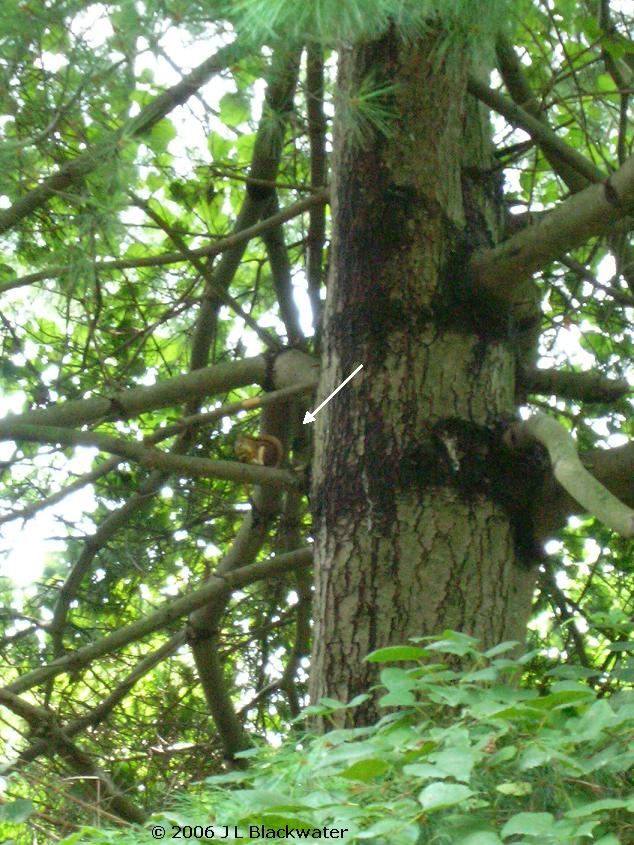
Over the summer, I began to notice a lot of activity around the little pile, and the dogs were always excited to investigate. The grey squirrels loved to use it as a launching pad to the nearest pine trunk, and various birds and bunnies took refuge there from time to time. But in recent months, a new creature arrived on the scene: the red squirrel. Until this little guy showed up, we’d seen nothing but grey squirrels everywhere!


When the red headed stranger set up shop in the yard, he went straight for easy street, and commandeered the tarp-covered wood “pilette.” How this little red squirrel managed to push out the big grey squirrels, I’ll never know – but it may have something to do with its major attitude and bossy, boastful nittering.

Here is a little about the red squirrel from the PA Game Commission site. It seems to describe our friend perfectly:

Wildlife Notes: Squirrels By Chuck Fergus

"The red squirrel is sometimes called a chickaree or a pine squirrel, reflecting its preference for nesting in conifers. Behavior, feeding habits and denning practices are generally similar to those of gray and fox squirrels, although reds sometimes nest in holes at the base of trees. They enjoy eating the immature, green cones of white pine. Unlike fox and gray squirrels, reds do not bury nuts singly, preferring a large cache -- often in a hollow log -- for storing food."

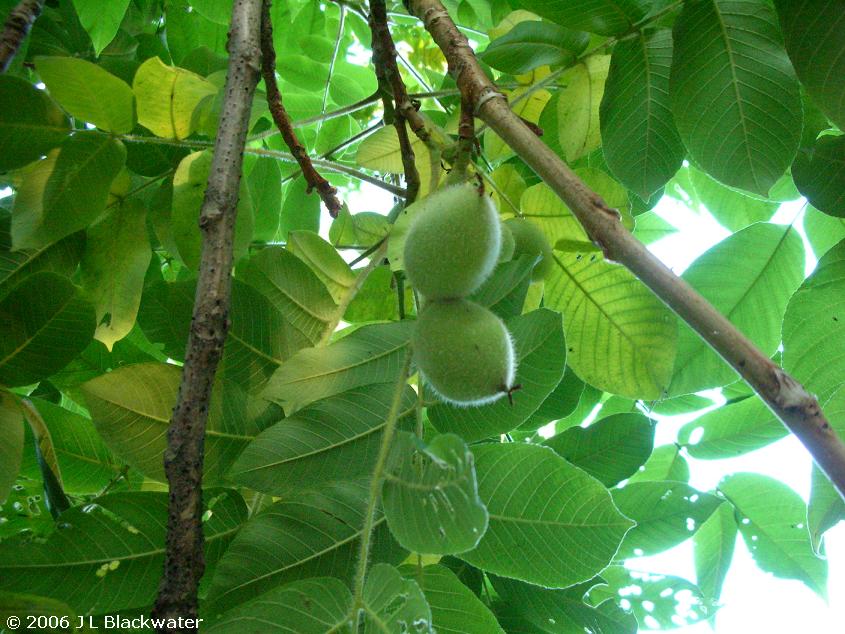
Late July, I began to hear a strange noise on the driveway by the mystery tree. It took me a few days to learn that it was the sound of the mystery tree nuts thwapping the top of the truck, and the gravel driveway. All day long there’s be a constant music of nutty percussions, and I began to notice that the squirrels were actually pulling the nuts off and throwing them down. The nuts would cover the driveway in the morning, and then disappear in the afternoon.

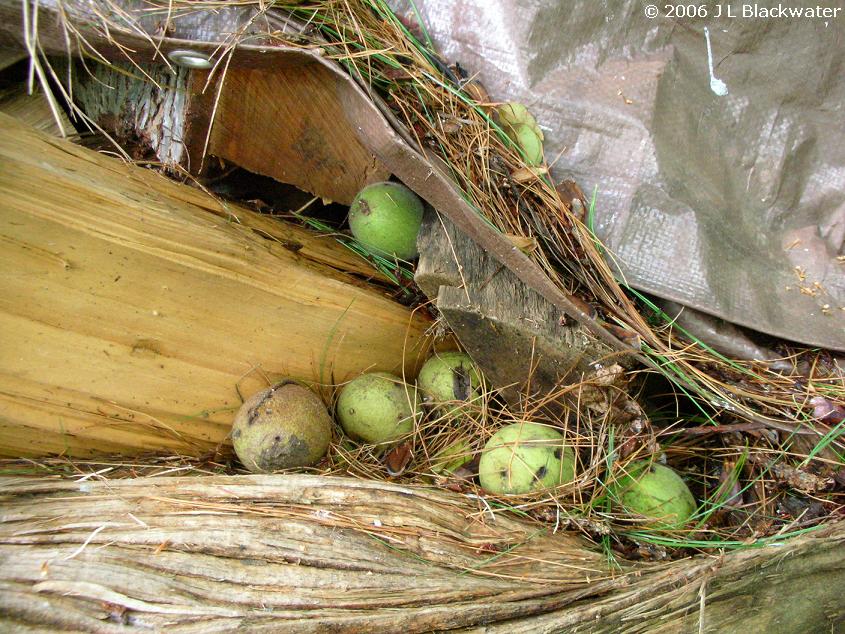
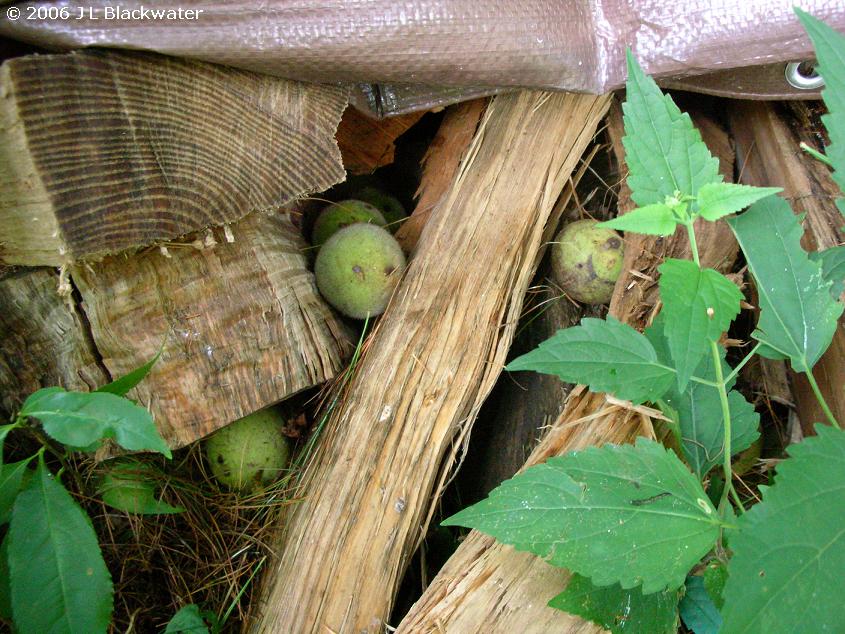
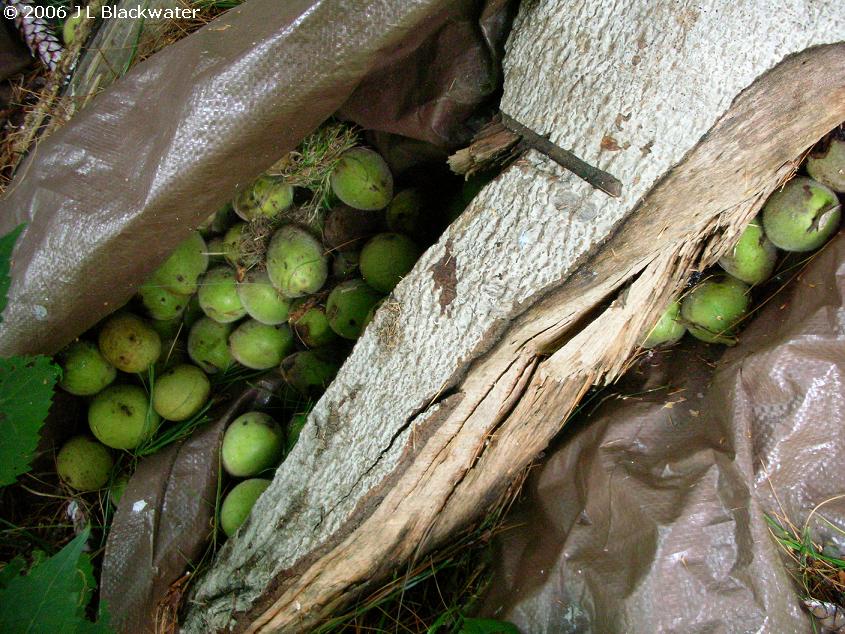
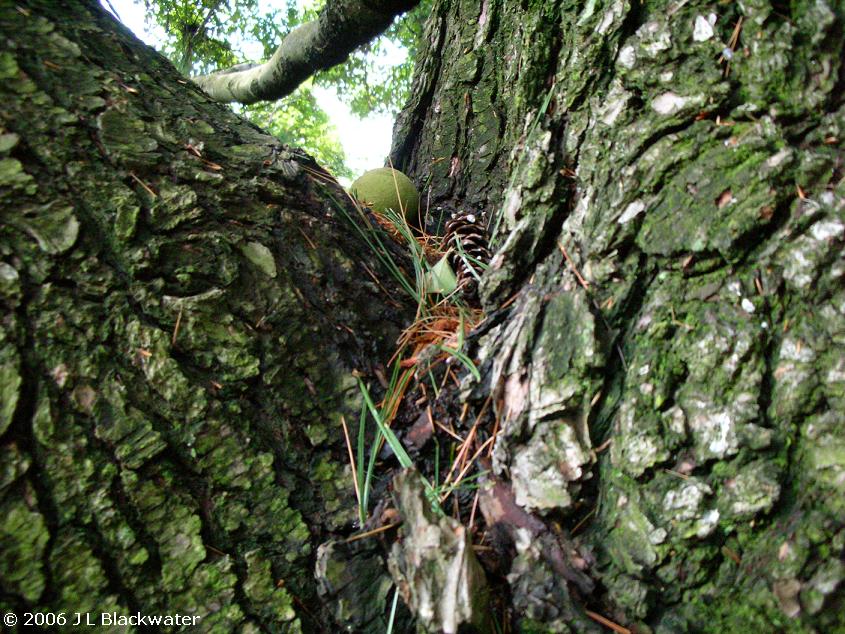
It wasn’t until a couple weeks ago that I learned where they were all going: the red squirrel’s winter stash. I haven’t removed the tarp to see just how many s/he has, but I get the impression that this squirrel has about 50%+ of the tree’s produce tucked away like so many Easter eggs in, around, and under the tarp over the remains of last year’s firewood. He's even tucked a few in the pines' armpits, "just in case."

S/he’s been working so hard at this over the last couple months, that now I don’t have the heart to uproot it! All day long the red squirrel guards the nut pile. I’ve tried to get clear images for you, but as soon as I come close, up the tree it goes.


A few days ago, I found a freshly-fallen nut on the driveway. Carefully I placed it on the very top of the tarp, and went inside. About twenty minutes later, I heard the squirrel crying out! I watched it while it stared and barked at the nut for two days, before it finally was accepted into the horde with the others. (In fact, I think the nut was eaten owing to the husk fragments all over the top of the tarp today).

Looks like we’ll be needing a new tarp.

Epilogue: As for the mystery tree nuts, I think we now have a proper identification. I believe we have a Butternut (Juglans cinerea), sometimes called a white walnut. I’m basing my educated guess on the data I can find online and in my books when compared with leaves, bark, fuzziness, and fruits. The fruits matured into heavy, round, fuzzy-husked nuts.

Now if I could just get one of them open, I could tell you what they taste like! Of course... I'd have to pry one away from the red squirrel first.