Arboreality - Tree Blogging
Showing posts with label leaves. Show all posts

Sunday, March 02, 2008

Festival of the Trees 21 Orchards and Fruits Edition Now Online at Orchards Forever


This month’s Festival of the Trees 21 is a special fruit and orchard edition hosted by Peg at Orchards Forever. You’ll be sure to enjoy this delicious selection of unique and tasty blog posts. Peg’s thoughtful edition of the Festival of the Trees is well worth the read. Fortunately for us, today’s Festival begins on a Sunday. Enjoy a lazy stroll through the orchards!

To
volunteer to host a future festival, and to submit blog posts to future festivals, visit the Festival of the Trees coordinating blog.

Monday, November 26, 2007

The Last of the Autumn Color


These images were taken at the beginning of November, when our autumn color was reaching its peak. We’ve had a long, beautiful color show this season, and Thanksgiving’s cold, wind, and now rain has managed to remove all but the last of the leaves.

Friday, November 16, 2007

Rainbow Sassafras


Last Autumn timing and weather prevented me from capturing the sassafras colors for Arboreality. This year – I was determined! Several little sassafras (Sassafras albidum) trees are tucked in the shadow of the stone silo here at the farm. Their colors did not disappoint.

Thursday, June 21, 2007

Happy Solstice!


Monday, June 11, 2007

Mulberry Tree Mystery Chronicles, continued


These images are from two different mulberry tree specimens, and I believe them to be two different species as well. The fruits are starting to mature, and when the lighting is better I’ll share some of those!

For those just joining us, we have a bit of a year-old-mystery on our hands concerning the various mulberry trees growing around the farm where I live outside Philadelphia, Pennsylvania.


Last month Sam gave us some great identification tips in the comments:

sam said...

"To distinguish Mulberrys:

Paper Mulberry (Broussonetia papyrifera) Leaves are densely hairy, and the fruit is round.

White Mulberry (Morus alba) Aggressive tree but shade intolerant, leaves are usually glossy above and the margins have rounded teeth. Ripe fruits tend to be lighter (think pink to purple) than M. rubra or M. nigra, though this is not always the case.

Red Mulberry (Morus rubra) Uncommon, but shade tolerant and prefers moist sites. Can grow to a fairly large size. The leaves are usually rough on top, margins have pointed teeth, and are not as glossy as M.
alba
.

Black Mulberry (Morus nigra) similar to M. rubra, it is the shortest of the lot, often with a twisted, leaning trunk. The best clue is strongly cordate (heart shaped) leaf bases."

I’m confident that sooner or later, we’ll get this all sorted out.

If you’re a mulberry expert, give us your two cents!

Thursday, June 07, 2007

Horse Chestnut Tree in Spring


At last, a few clear images of the Horse chestnut tree (Aesculus hippocastanum) of the Aquifoliaceae family. Horse chestnuts are popular around Seattle, and this one has been growing in my parent’s yard for as long as I can remember. Unfortunately, I missed the blossoms during my visit to Seattle – and horse chestnuts have some really beautiful flowers!

If you haven’t had a chance, be sure to scroll down and wander the Festival of the Trees 12 – Meditations.
Note: Blogger/Blogspot has been having a number of issues associated with uploading images and publishing in recent days. Please let me know if you have any difficulty reading or commenting at Arboreality. Thank you!

Wednesday, May 23, 2007

Morning Mulberry Trees


Some of you long-time Arborealists may recall the “mulberry mysteries” of last year.

To summarize for our new readers, during my first year in southeastern Pennsylvania I have learned that there are at least four varieties of mulberry trees growing domestically and semi-wild throughout the surrounding area. Furthermore, it is entirely possible that there are unique cultivars from cross-pollination, and that these varieties may be indistinguishable from common species (at least at first glance).

The four varieties I’ve read about include Red mulberry (Morus rubra), White mulberry (Morus alba), Black mulberry (Morus nigra), and Paper mulberry (Broussonetia papyrifera). They each have some distinguishing characteristics, but overall I have had limited success with telling them apart. According to The Audubon Society Field Guide to North American Trees: Eastern Region; Elbert L. Little, there are roughly 1400 species in the mulberry family (Moraceae) world-wide; in Eastern North America we can find five native and three naturalized species.

I can see common attributes among certain mulberries, so I know there are a few distinct varieties here at the farm. Characteristics include growth habit, over-all shape, leaf shape and texture, and preferred growing location. Still, there’s nothing definitive for me to point to which makes me confident with identification (not yet, that is).

Today’s images are of a particular species which is common around the farm (this one grows just outside the cottage, so I see it each morning). I believe this variety to be either the Black or the White mulberry.

If you have an opinion on this mulberry’s identity, or tips and tricks from your experience with identifying mulberries in your neighborhood, please do share! In the mean time, I will continue with the mulberry mystery chronicles. Sooner or later, we will find an answer.

Side note: the mulberry family Moraceae also includes the Osage Orange (Maclura pomifera).

Wednesday, November 29, 2006

Festival of the Trees 6, Last Day for Submissions


Good morning! Today is the last day available for you to submit your entries for the Festival of the Trees 6.

To learn more, check out the Festival of the Trees coordinating blog, or write me with any questions.

Send submissions to me at: jadeblackwater [at] brainripples [dot] com

Have a good one!
PS - Sorry I've been so slow in responding to comments the last few days! It's a busy time of year (for everyone I'm sure), but I just want to take a moment to say THANK YOU to everyone who visits, comments, and enjoys Arboreality!!!

Tuesday, November 21, 2006

Sweet Gum Tree, Before the Storm


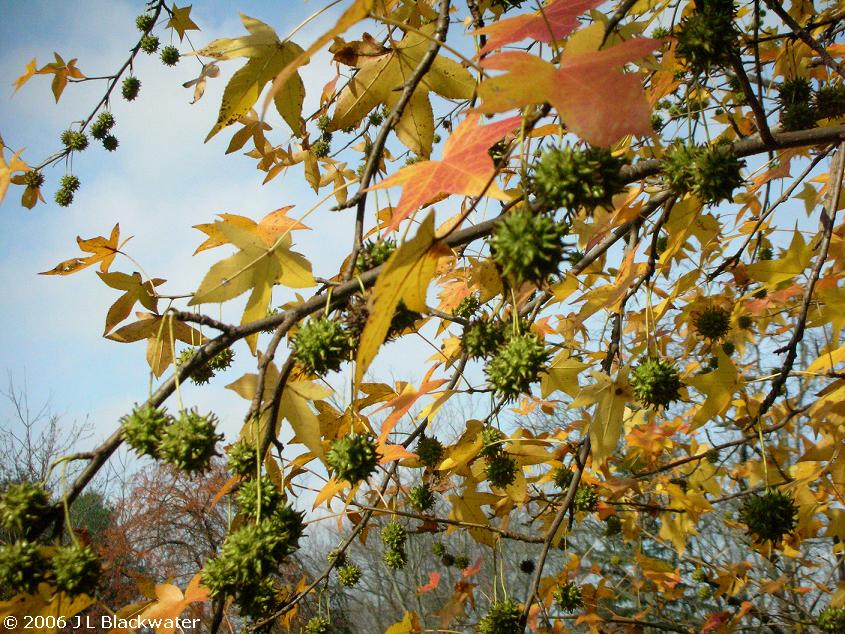
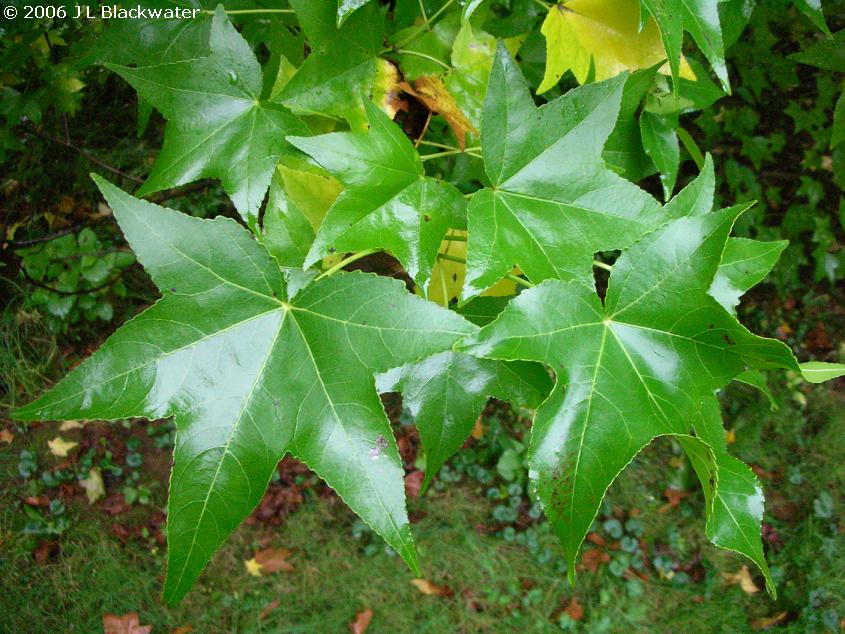
The Sweetgum tree (also called Redgum or Sapgum) gets its name from the gummy resinous substance beneath the bark which, during pioneer days, was stripped from the trunk and used medicinally, or as a chewing gum.

Before the major wind and rain came through the Northeast last week, this Sweetgum tree (Liquidambar styraciflua) was in full color. Now all that remains are the prickly green fruit balls.

Friday, November 10, 2006

Another Tree Blog: Tree News


Looking for more news about trees?

Tree News is a blog about trees in the Atlanta area, authored by arborist Jesse Milton. Jesse is a Certified Consulting Arborist, and you can learn more about his knowledge and services at his business site One Bark.


Just check out his latest post about the Giant Pecan Tree! How cool is THAT?

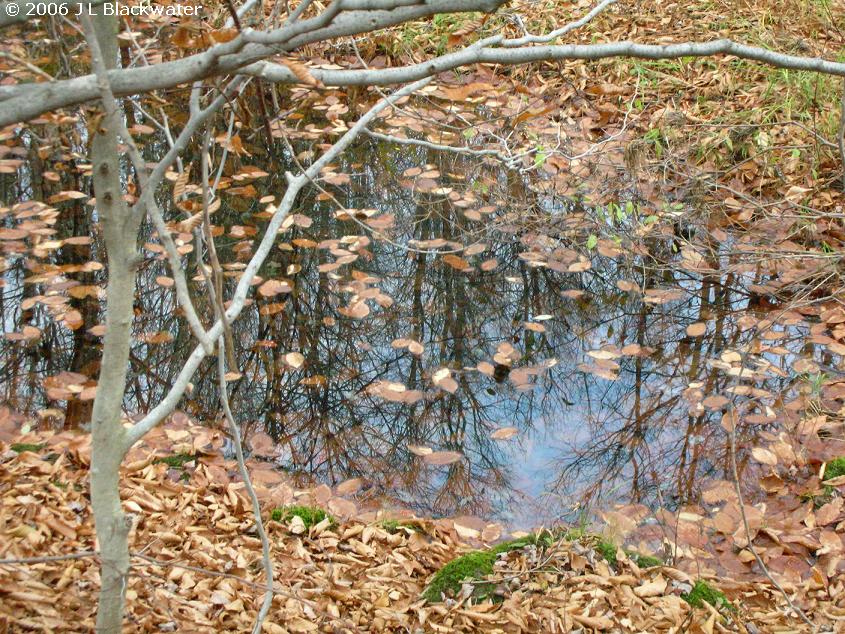
Reflections of Trees


Today’s image is from our travels on Halloween while staying in the Poconos. The beech trees are among the last trees in the Pocono area to hold and release their auburn leaves.

The week just got away from me! I still want so much to share all the fun things I saw in the Poconos, but you know how it goes after vacation...

Monday I’ll tell you about where we stayed, followed by some highlights of the parks we visited, the lakes and rivers we fished, and the trees and forests that kept us company along the way.

Tuesday, October 24, 2006

Red Maples


Red maple (Acer rubrum) in fall colors for Geraldine!

The first two images are from a tree at the Washington Crossing park on the Pennsylvania side.

The third image you see was taken back in September 2005 in Washington State: sunrise on parking lot B at The Evergreen State College. This is a picture of what some Greeners know lovingly as the “dancing maple.” You can’t miss her.

Some of you long-time arborealists might even remember seeing a few of the “Sunrise on Parking Lot B” series back at the beginning of Arboreality in October 2005.

If you’re looking for more fall colors, you might enjoy some of the archives from last autumn in Washington State. We have o
ak from the post office in Renton, Big leaf maples, and one of my personal favorites: Japanese maples.

Monday, October 23, 2006

Backlog in the Tree Blog... let’s start with oak


With my favorite season well underway, I now have far too many pictures to share, and I promise I'm just going to take more.

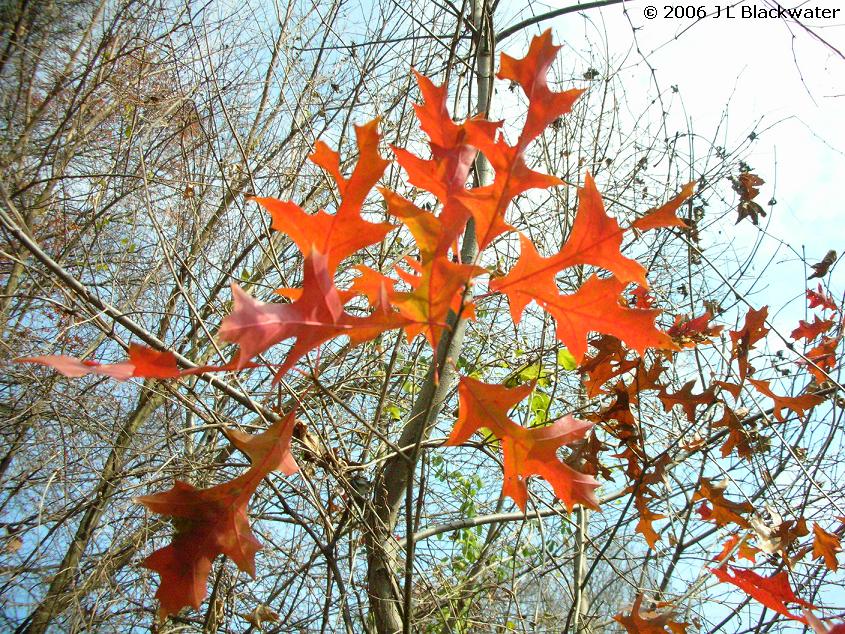
Today, let’s start with oak. Earlier this month Salix requested some Red oaks. While many of the oaks are only just turning, some (as those shown here) are in color.

The first two images I am almost certain belong to a Pin oak (Quercus palustris), also called a Swamp oak or a Spanish oak (but be careful, there are different kinds of “Swamp oak”).

The last image I’m not sure of… it could be another Pin oak, or it could be any of several other varieties of oak. I’m still learning to tell them all apart, and leaves can be tricky! More investigation is clearly in order.

I am also still trying to find some pictures of the ash trees for Jenn, but so far I haven’t located any (I haven’t given up!). According to the PA DCNR, there are white ash and black ash growing Pennsylvania; where is the question.

However, if you’re looking for a quick fix of lovely Mountain ash (still green), check out these pictures from Chavala. She's got some great stuff.

Friday, October 13, 2006

First Frost


Thursday, October 12, 2006

Autumn Afternoon


The autumn is getting ahead of me. So many beautiful trees turning their leaves combined with my recent excursions have left me with a serious arboreal backlog (no pun intended). I am not want for material in our tree blogging!

For now, how about a little peek at things in my neck of the woods from this afternoon?

The top image is our Yellow Poplar (Liriodendron tulipifera) of the family Magnoliaceae. Also called the Tulip Poplar and the Tuliptree, this tree calls out during any season, and demands to be noticed. It grows big, fast, and beautiful.

Our second image is the sassafras, of course! Sassafras (Sassafras albidum) of the family Lauraceae, is among my favorites here on the East Coast. I love how the colors are as variable as the leaf-lobes.

I just can’t decide what I want to share next! Any requests?

Wednesday, October 04, 2006

Playing in the Pocono Forests


In the Poconos, the trees are at a wonderful point where anywhere from 1/3 to 1/2 (or more) of the trees in a given area are turning their leaves. Fiery reds, pinks, oranges, and golds are contrasted against rich greens and browns.

It was the ultimate in eye candy, and while my camera couldn’t possibly do our travels justice, these are just some of the beautiful things we saw in the forest. We visited the Delaware State Forest, Gouldsboro State Park, and Promised Land State Park, where most of these pictures were taken.

If anyone knows the identity of the plant in the eighth picture, please tell us! It looks so familiar, but I'm not quite sure what it is. Perhaps some type of fern?

Tomorrow: the Delaware Water Gap Recreation Area

Friday, September 22, 2006

Happy New Moon, and Happy Autumn Equinox!


These are images from my morning walk today. The bucket is filled with the black walnuts I collected yesterday afternoon, and there’s more where these came from!

Happy Autumn to all those in the northern hemisphere, and Happy Spring to everyone in the southern hemisphere!

Friday, July 07, 2006

Sassafras Trees and An Inconvenient Truth


Last weekend I was invited by my landlady to join her and a friend to see Al Gore’s movie, An Inconvenient Truth. I encourage everyone to see it. Better yet, bring along a friend.

The importance of this film does not lie with Al Gore or Davis Guggenheim or any of the other wonderful contributors; it lies in the act of disseminating this information in a clear, understandable, and meaningful way to Americans.

Apart from enjoying the film, the other really cool part of my evening was meeting my landlady’s friend. She lives in a house surrounded by trees, including a beautiful sassafras grove!


I never seem to have my camera when I really need it! However, after gazing up at the sassafras canopy for a while, I realized that there must be sassafras around the farm. Sure enough, yesterday I found some growing around the old silo.

What really tickles me about these trees is how much they remind me of the Pacific rhododendrons growing in the forests around Seabeck. They’re tall and slender, and the leaf arrangement is somewhat similar.


However, sassafras belongs to the Lauraceae family, while the Pacific rhododendron is a member of the Ericaceae family, which are both a part of the division Magnoliophyta - the flowering plants.

Plants is plants!

Tuesday, June 13, 2006

Yellow Poplar Tree in Bloom


Last month we explored the Yellow Poplar tree, also known as the tulip tree. Laura tipped us off to the flowers, which are this tree’s namesake! While I eagerly awaited the blossoms on the local trees, they managed to open and wither before I could take a picture to show their true elegance. The title of my blossom image should be “spent.”

On a more fruitful note, I now can identify several other yellow poplars in the forest around the swamps and springs, where a few enormous trees have had me wondering at their identity ever since last winter. Which reminds me: I should get back in there some time soon so you can see an update of the woods in leaf!


If you want to see some really nice images of the yellow poplar flowers in full-glory, you can check out the gorgeous tulip tree images posted at Turning Toward the Light. The artist got super lucky with some shots of a local tree, and offers you some great information too!

Monday, June 05, 2006

Norway Maples Go To Seed


Remember the Norway Maples that we looked at in April? Here we can see the self-same tree with fresh green seeds growing in the spring warmth. As kids, we’d refer to these seeds as “helicopters,” owing to their rotary flip-flip-flip motion when they come gliding to the ground.

If you’re interested, you can also revisit our exploration of the
Crimson King Norway Maple trees from the Kirkwood Preserve.