Showing posts with label rhododendron. Show all posts

Wednesday, July 23, 2008

The Art of Looking (and Wandering)


It’s taken me some time to find my groove now that I’m back in the Pacific Northwest. Wandering through the forest helps me to remember the useful arts of looking, listening, and waiting. Inspiration, clarity, and understanding require a fair portion of patience and “receptiveness” to the unexpected.

The next time you have a chance to stroll through a park, garden, or forest, remember to slow your pace a bit and look, or listen, or simply breathe. If you cannot seem to find anything new, try a change of perspective: crane your neck upwards, squat down on your heels, lay on your belly, or simply turn around and look back on the path you’ve just traveled.

Monday, November 27, 2006

Rhodies for the Morning


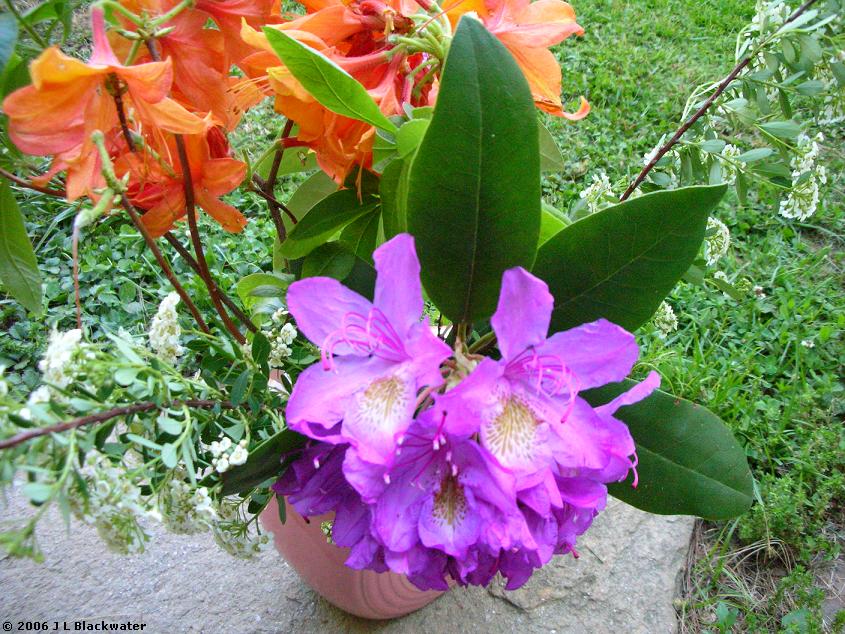
Here are some rhododendrons to start your morning off. Remember that you have two more days to send in submissions for the Festival of the Trees!

So, where did November go?!!? I just love this time of year, and it inevitably flies right by. There is much excitement ahead at Arboreality this week – stay tuned!

Wednesday, October 04, 2006

Playing in the Pocono Forests


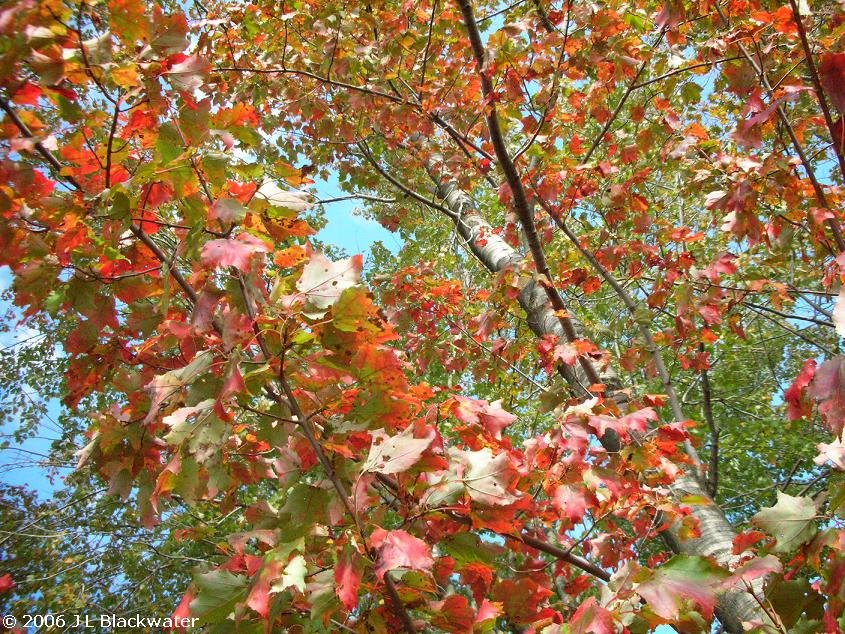
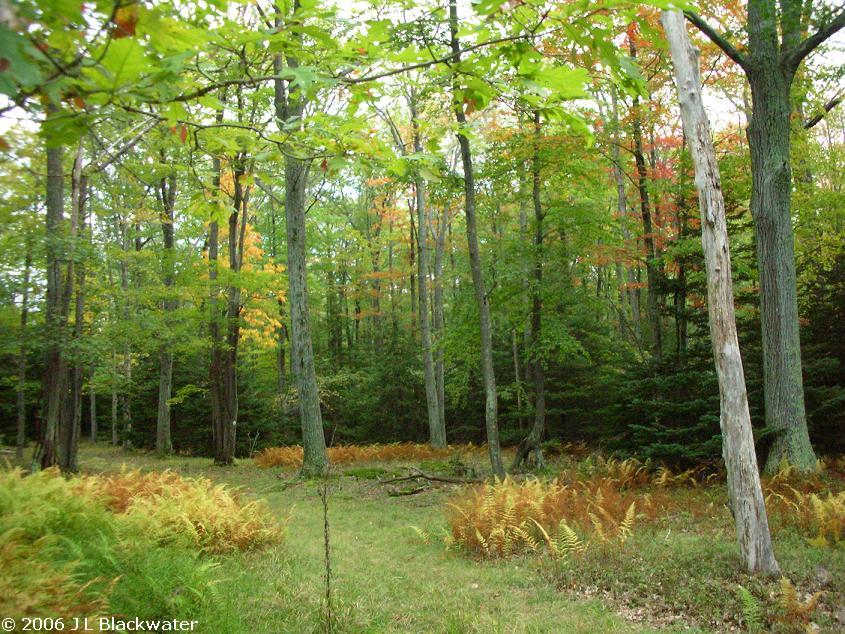
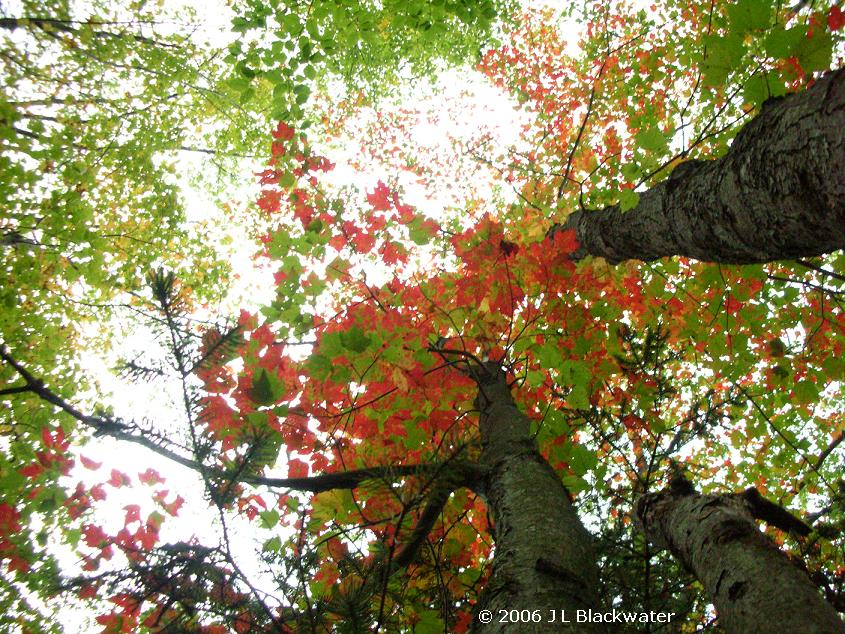
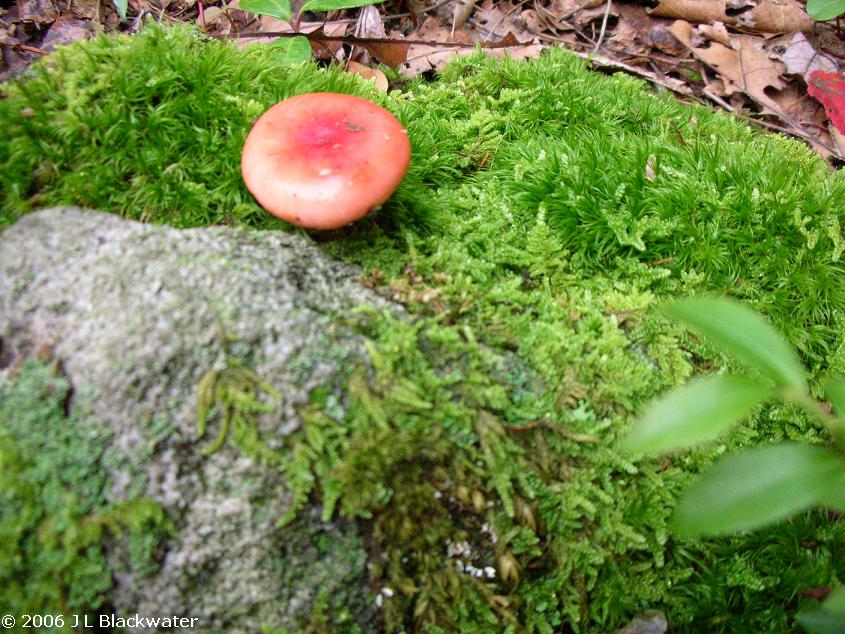
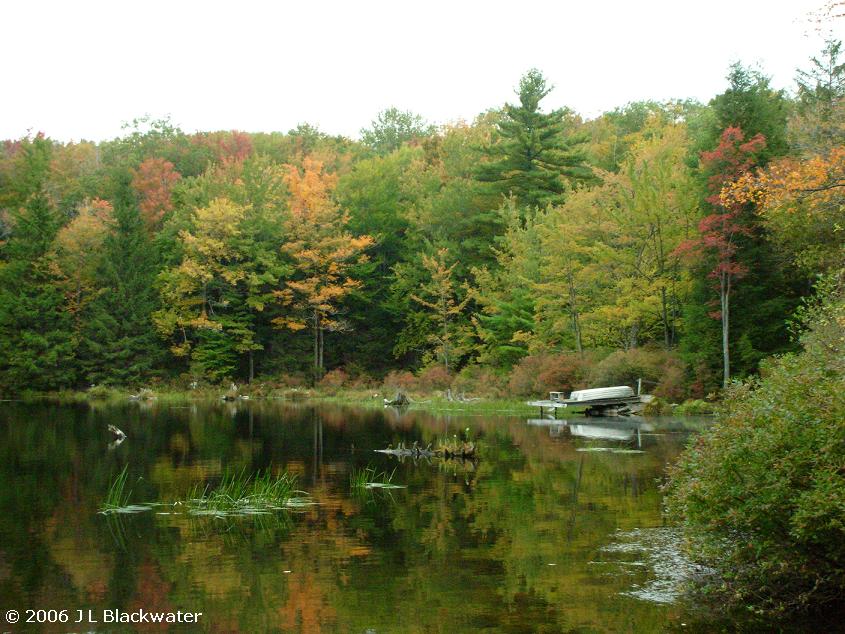
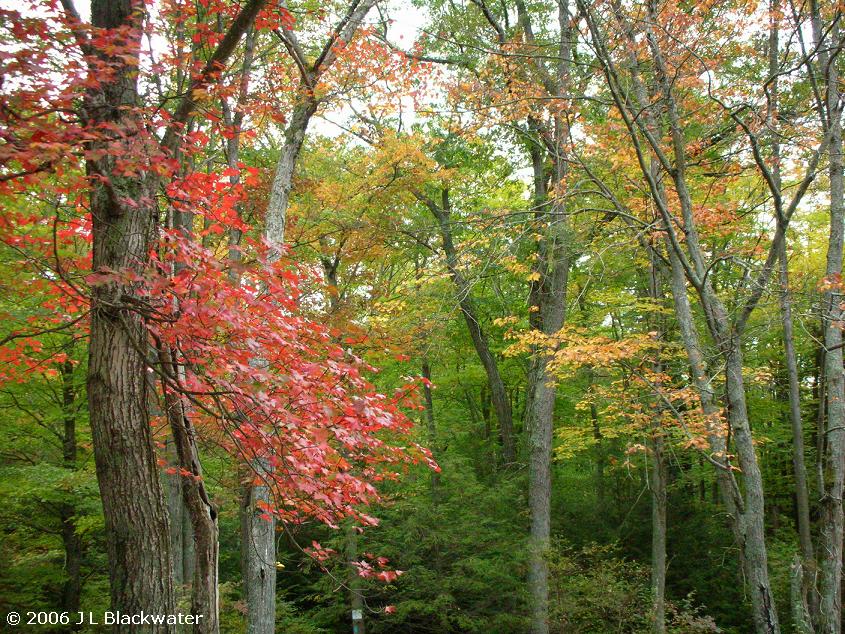
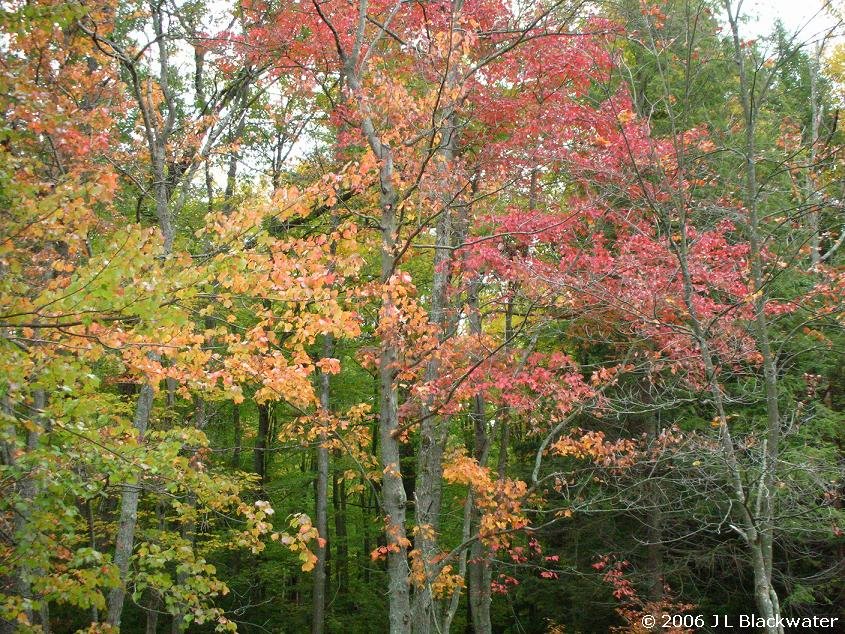
In the Poconos, the trees are at a wonderful point where anywhere from 1/3 to 1/2 (or more) of the trees in a given area are turning their leaves. Fiery reds, pinks, oranges, and golds are contrasted against rich greens and browns.

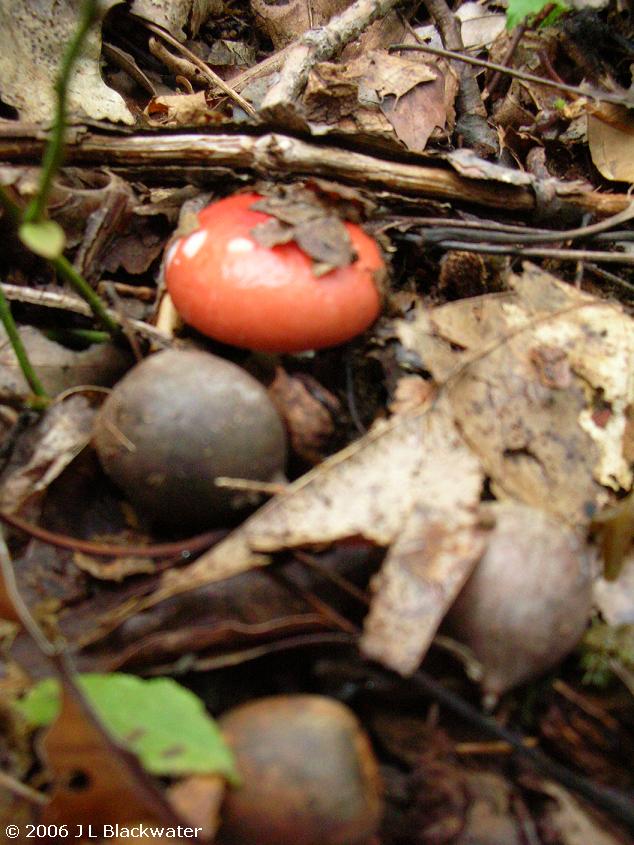
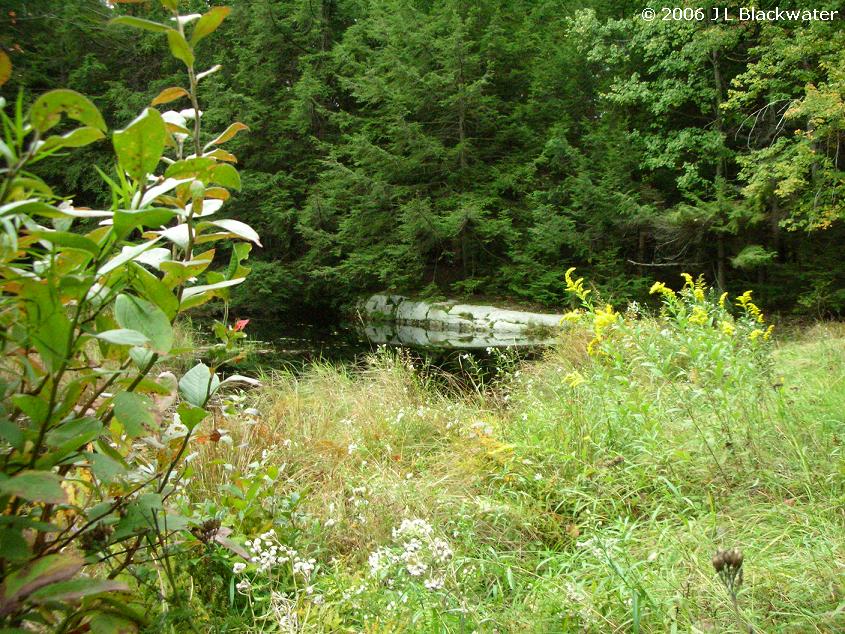
It was the ultimate in eye candy, and while my camera couldn’t possibly do our travels justice, these are just some of the beautiful things we saw in the forest. We visited the Delaware State Forest, Gouldsboro State Park, and Promised Land State Park, where most of these pictures were taken.

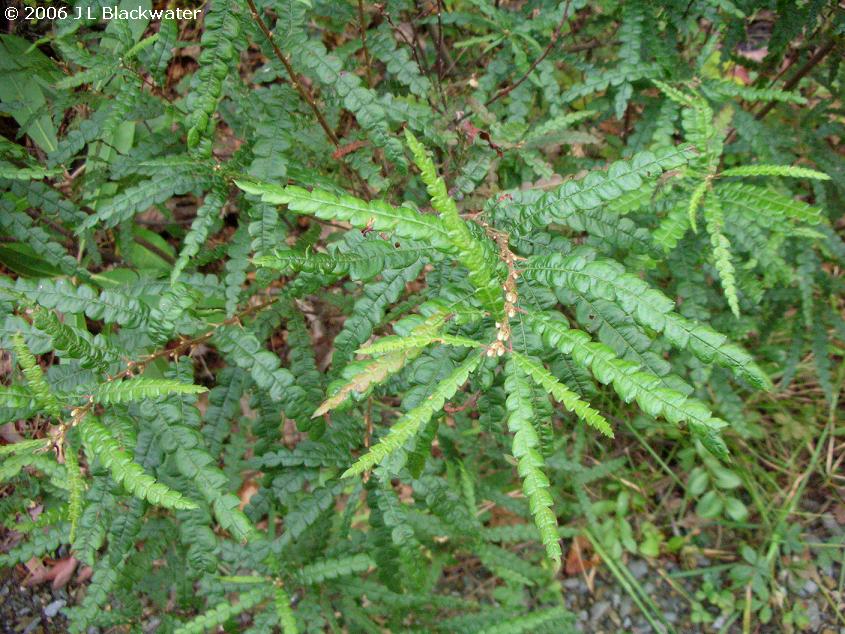
If anyone knows the identity of the plant in the eighth picture, please tell us! It looks so familiar, but I'm not quite sure what it is. Perhaps some type of fern?

Tomorrow: the Delaware Water Gap Recreation Area

Thursday, May 25, 2006

More Flowers!


Ok, I know I said I’d show you the colorful beech tree today, but when I woke up this morning to the beautiful sights and smells of the flowers in my front room, I just had to take some more pictures and share them!

PS – you may recognize the yellow gerbera daisy from the plant my landlady gave me on “yellow flowers day.”


PPS - Tomorrow, you'll REALLY get to see the colorful beech tree!

Wednesday, May 24, 2006

Flowering Trees and Shrubs


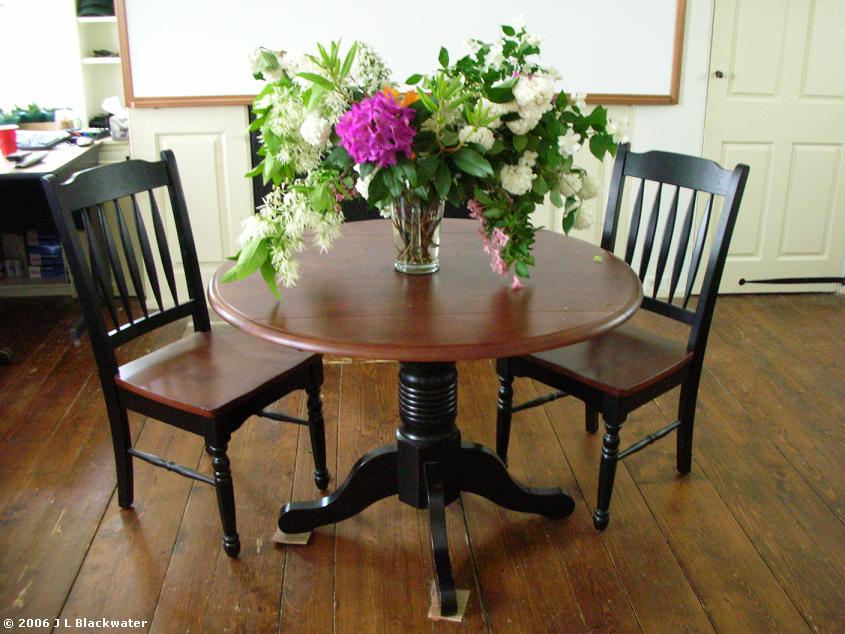
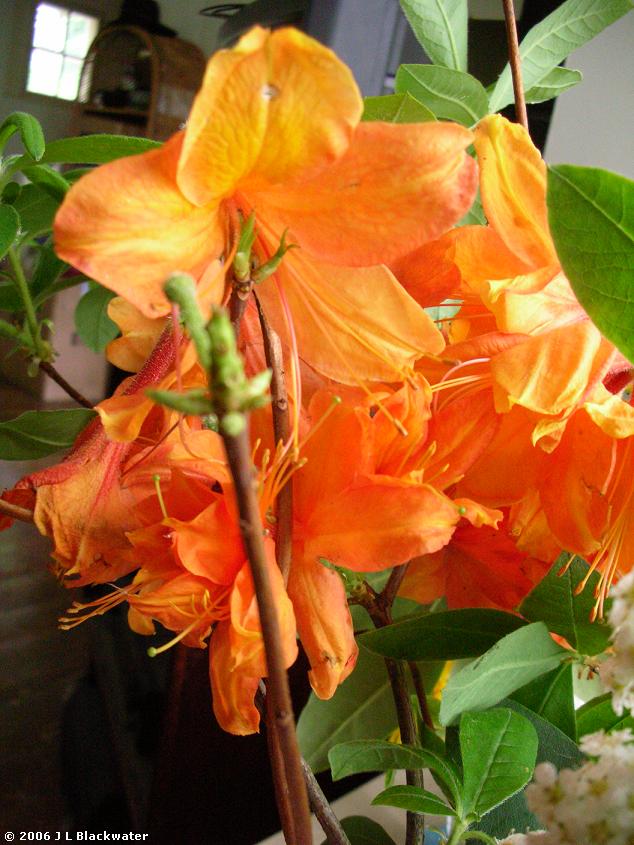
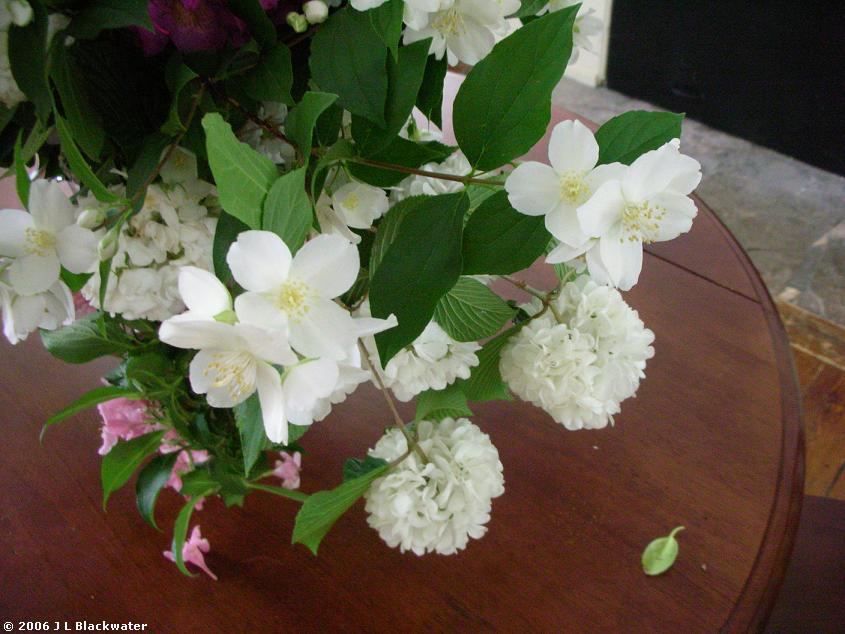
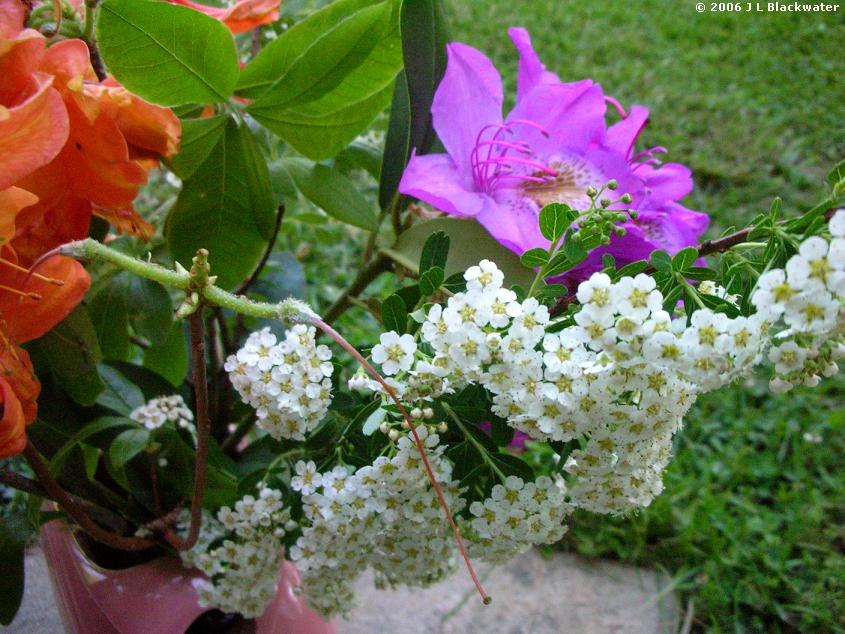
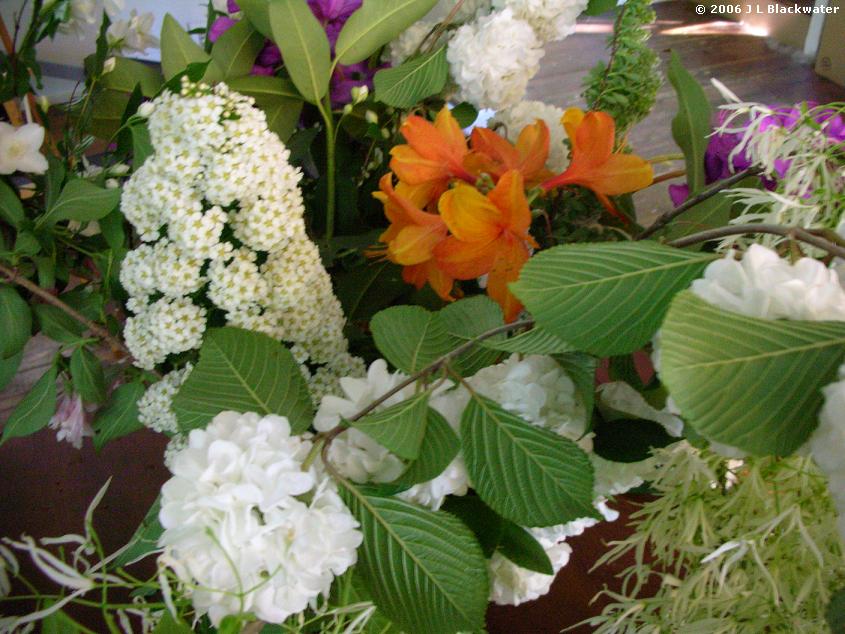
This afternoon my landlady gave me the most enormous bouquet ever! It was comprised of cuttings from flowering trees and shrubs in her garden, including mock orange, rhododendrons, boxwood, snowball tree flowers, and several others for which I do not yet have a name.

The bouquet was so outrageous that I couldn’t properly capture it in one shot. Here you see several different images of the different arrangements I was able to make from the bunch. My whole house smells spectacular!

Tomorrow, I have a seriously cool tree to share with you. I’ll give you a hint: it’s a colorful species of beech tree.

Saturday, May 13, 2006

For Mom


Happy Mother’s Day Mom! These flowers are for you!

Also, a very happy Mother's Day to Mama Jo!

Here is a little bit about the flowers for you:

The little purple ones are from my next door neighbor’s dwarf Chinese lilac bush (also called the dwarf Korean lilac). This beautiful bush began blooming in the last week or so, and it smells heavenly! Its fragrance is even stronger than the other lilacs on the farm.

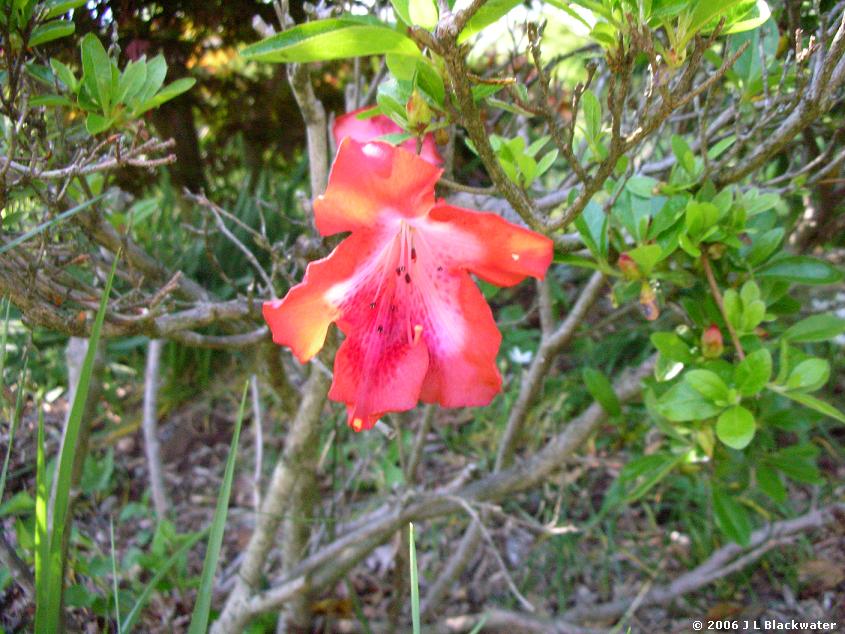
Our pink-red flower looks like a rhododendron to me, but I couldn’t possibly tell you its particular species. It may be some sort of azalea, a cousin of the rhododendron.

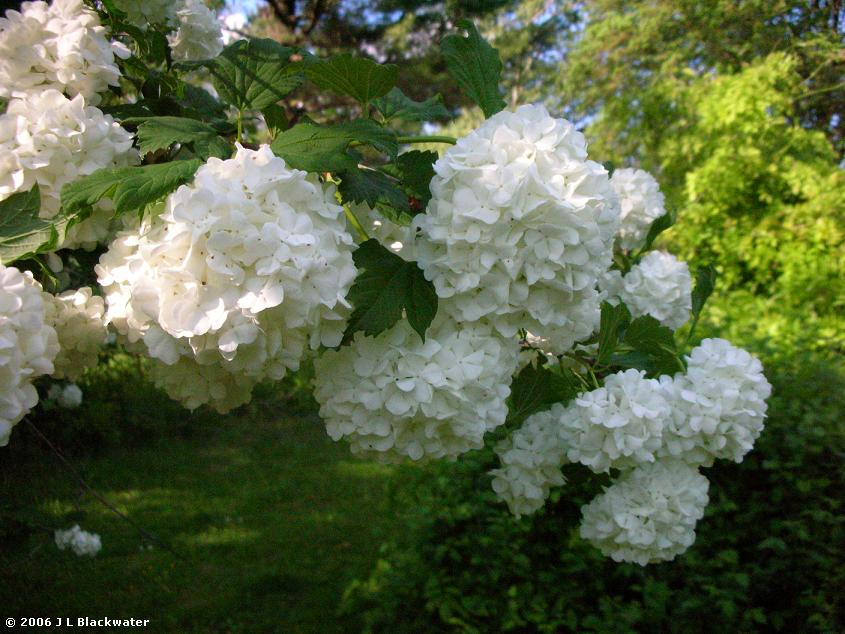
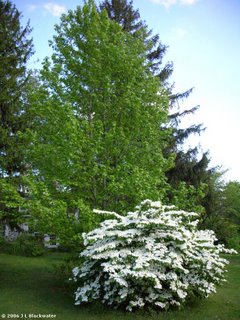
The snowball tree you may recognize from your own gardens… I’m sure it has a real name besides “snow ball tree”, but I’ll have to work on finding that out for you.

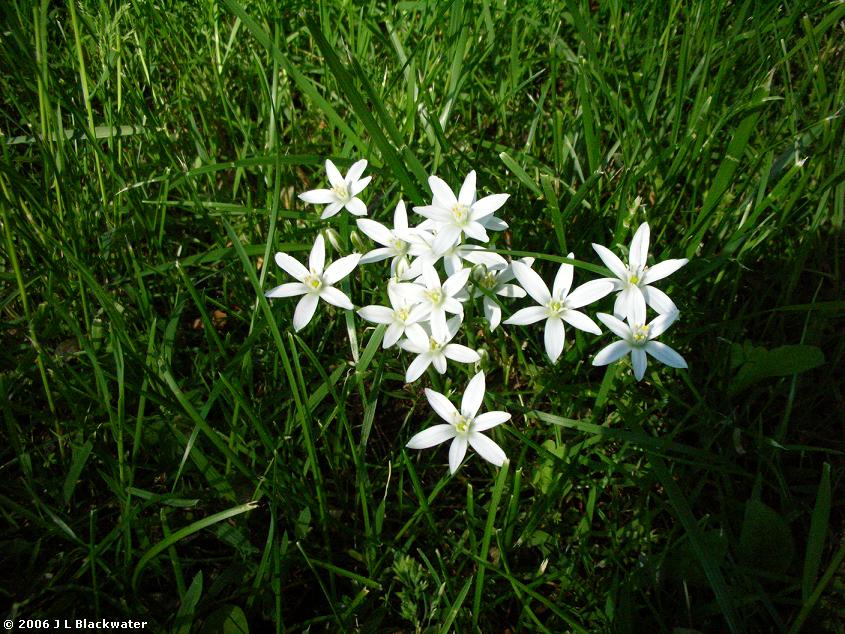
As for the little white flowers in the grass – I have no clue what they are, but I love them! They decided to spring up under the trees a couple weeks ago, and appear to grow wild all around the farm. I am lurking with my shovel to bring some of them in closer to the cottage!


The hydrangea and the sweetgum have a wonderful little anecdote which I have been saving especially for Mother’s Day to share!

And now, A Mother's Day Story:


My landlady lost both her parents in recent years, one after the other. As with many other family members around the farm, she and her family have planted trees in their memory.

According to my landlady, in life her mother was a formidable and confident woman, while her was father a kind and soft-spoken man, an artist and craftsman. She described how her mother would always tower over her father, issuing orders which were to be followed forthwith.

In death, their story continues: for Dad, they planted the hydrangea, and for Mom, the sweetgum, which are pictured in these two final images. Mom continues to tower over Dad year in and year out, and Dad quietly opens his graceful blossoms each spring before Mom’s leaves are out in force.

* * *

To my mom, Mama Jo, and to mothers everywhere:

Happy Mother’s Day!

Wednesday, November 30, 2005

Neighbors


To conclude our investigation into the Pacific Rhododendron, I’d like to show you two of our subject rhododendron’s favorite neighbors, and dear friends of my own.

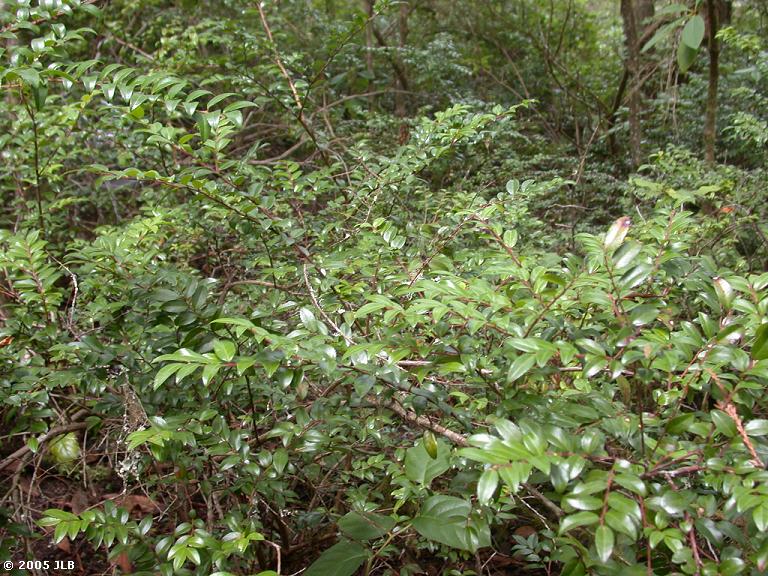
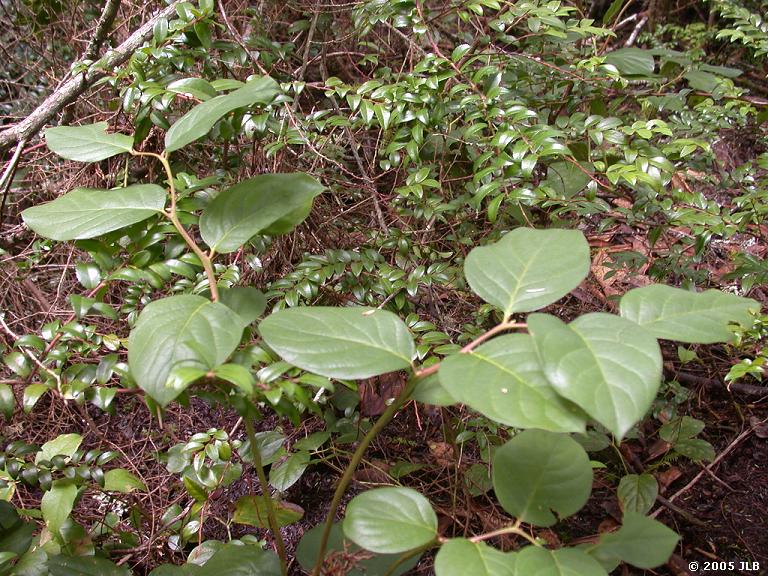
Meet Salal, and “Mystery-Bush” – two shrubby evergreens that grow happily along side the rhododendrons in my back yard in Seabeck. These two can be found in many other places around the Pacific Northwest.

The salal is the plant with the large round-ish leaves. Like the rhododendron, salal is a member of the family Ericaceae.

Unlike the parking-lot variety which are small and close to the ground, the salal growing in the forest interior have to reach high to stake their light claims, and most are over a meter tall. Others grow up to five meters high, often leaning on their neighbors for extra support.

As to “mystery-bush”… here is my quandary: I believe that it is a type of common huckleberry, also of the family Ericaceae, but I haven’t been able to confirm that. Another alternative would be that it is a shrub called boxwood (part of a different family, I believe). I am simply at a loss. Maybe they are one and the same, and it's merely a question of local word choice?

Whatever it is, this lovely plant produces swaths of tiny, pink fragrant blossoms which are followed by huge clumps of juicy, sweet, blue, violet, and black berries. Not only do the small birds and the bumble bees LOVE these plants, but apparently huskies do too!

Both of the husky dogs that have lived with me have enjoyed many an hour sitting beside these bushes, shucking the berries off like so much corn! Once they’ve finished with one bush, they move to the next one. The evidence of their efficient and voracious harvesting method is shown in the undigested leaves adorning each healthy poopy in the morning.

As a side note, we also have another huckleberry that grows around the forest which produces tiny, tart, red berries. As much as I might miss all my forest friends of Western Washington, I am so incredibly excited for my opportunity to meet all the plants of the East Coast!

Tuesday, November 29, 2005

Up close and personal... with mosses and lichens!


While examining the rhododendron as a whole, I also took some time to investigate the rhododendron’s partners and neighbors. Today we’re looking at some of the mosses and lichens growing on and around our subject rhododendron.

Sadly, I never had the chance to research each one and learn their names and attributes… so all you moss and lichen buffs out there, speak up!

The most exciting thing for me about studying this part of the rhododendron’s life, is to observe the ways that these mosses and lichens behave in different weather conditions. Here you see them on the day before a rain. They are beautiful, but dry. On the following day when the rains saturate their bodies, each moss seems to grow to twice its size, and reach out into the air with a just-audible sigh of contented “ahhhhhhhh!”


Remember to click on images for more detail.


Wednesday, November 23, 2005

Spent


After blooming, the rhododendron flowers do like most flowers do, and produce seeds for the next generation.

Here is an image of our subject rhododendron, in which you see some spent seed pods from the previous years’ flower buds.


[Scroll down a little to yesterday's post for images of the beautiful rhododendron flowers].


Tuesday, November 22, 2005

Flowers for the flustered


I needed a flower today… so here you have them.

These are images of the beautiful splendor that is the native Pacific Coastal Rhododendron in bloom. Blooming for wild rhodies in the Pacific Northwest typically occurs in May. Rhodies in the forest interior will take their own sweet time, however.


It was mid-winter when I was conducting my study of the rhododendron we’ve been talking about. Consequently, the pictures here are of another rhododendron… one with its own story.

One day, I was wandering the backyard when I came across a chunk of rotting wood about a foot long with a bend in it like my elbow. Springing from this wood was a tiny rhododendron seedling. Excitedly, I scraped back the earth with one hand while cradling the wood with the other right next to the fencing you see in the pictures. I placed the wood in the earth with the rhodie seedling sticking up, and left it to go about its business.

The rhododendron happily sprang forth, and the pictures you see here are taken in its second year when it bloomed for the first time. Talk about a healthy first bloom! Incidentally, these are the images I used as templates for my sketches of the rhododendron on my design for the
Washington State Quarter.

Be sure to click on these pictures for maximum enjoyment. Better yet, come visit Kitsap County in late May – you won’t be disappointed!


Monday, November 21, 2005

Rhododendron trunk detail

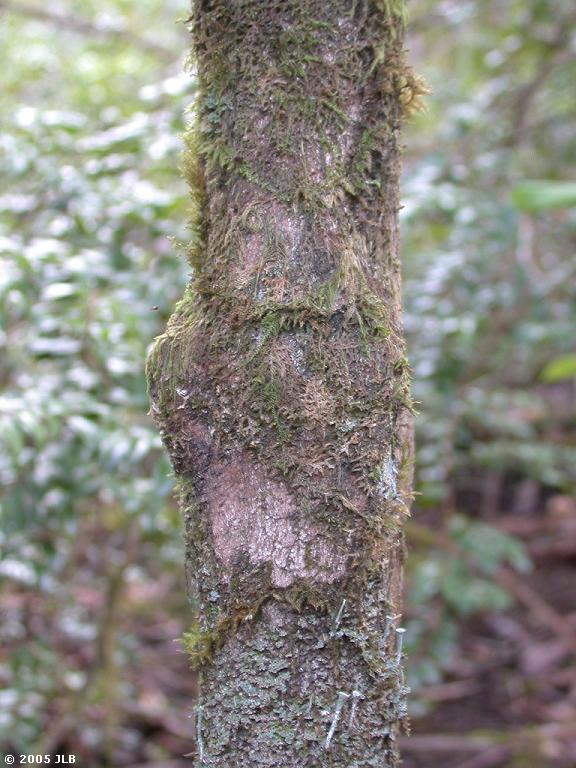
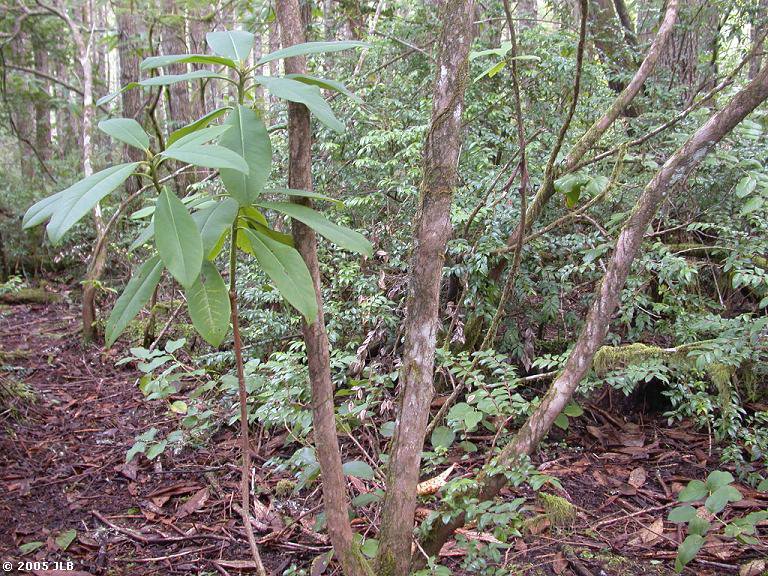
In this picture we see the three “primary” trunks associated with the subject-rhododendron. Along side the three primary trunks is the newest member – the young fledgling you see just to the left which stands only a few feet tall.

If I were to remove some of the duff from around the base of the trunks, I suspect I would see that these trunks in fact connect directly to other nearby rhododendrons on either side of the trail.

However, I had no intention of disturbing my green friend… so it remains a theory.


Remember you can click on images to enlarge for more detail!


Sunday, November 20, 2005

More rhododendrons

This is one of my favorite images that came out of my rhododendron tree research project. Don’t you just adore that voluptuous rain drop hanging on the lip of the leathery leaf? Mmm... I smell rain!

The rhodie in this picture is in fact different from the one I was studying. I pass it on the trail while on my way to the subject-rhododendron. The particular morning of this picture followed a nice night-long rain.

For all I know, the rhododendrons in the forest are all just pieces of one another… it’s difficult to determine where one rhodie ends and the other begins when you look at their growth habits and root systems.

Inside the forest, rhododendrons often appear to reproduce vegetatively (using existing parts to create new plants), as opposed to clear cuts where you can see distinctive baby “saplings” springing up separately, obviously from seed-starts.


Saturday, November 19, 2005

Pacific rhododendrons of the forest interior


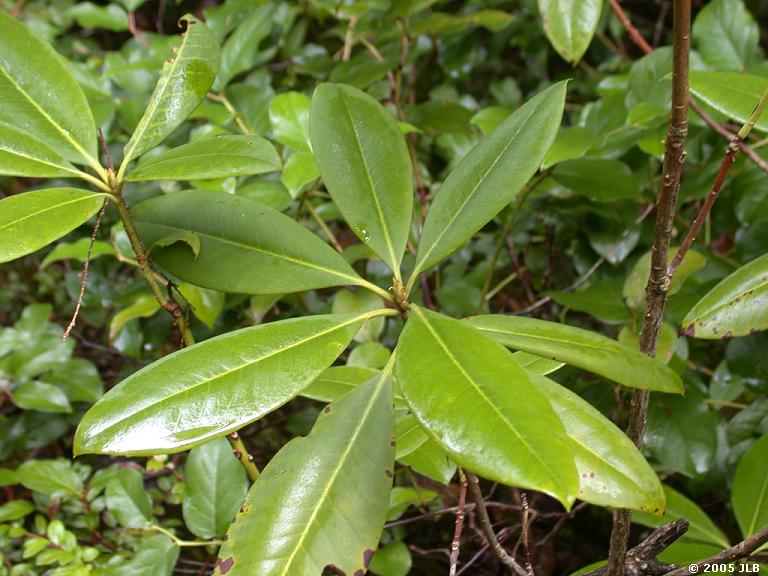
The native Pacific rhododendron (Rhododendron macrophyllum) which grows around Western Washington and other parts of the Pacific Northwest are truly among my favorite “trees.”

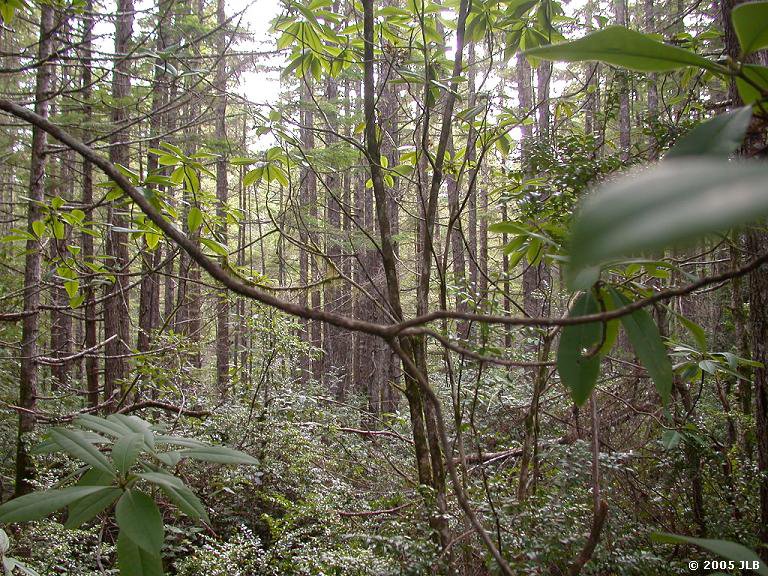
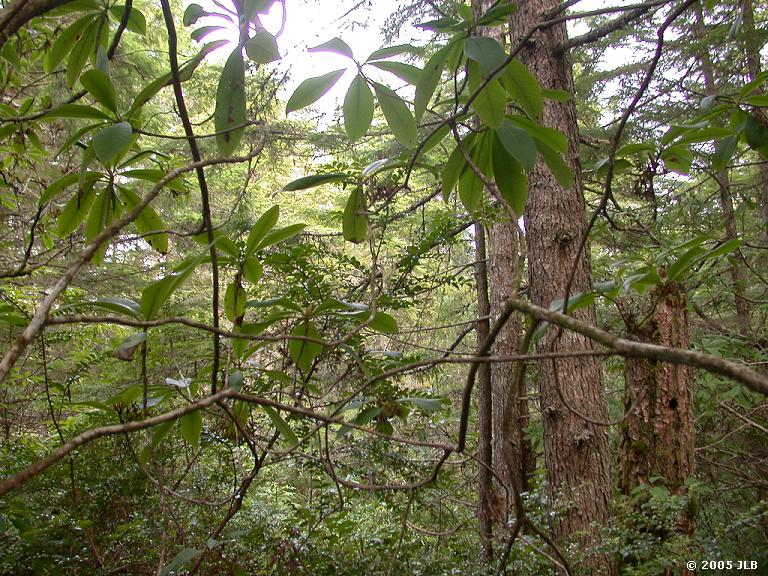
When rhododendrons grow with other pioneering tree species in clear cuts, they are squat and bushy. However, in the interior of the forest, where there is ongoing competition for light, the rhododendrons grow into elegant, leggy creatures extending branches in all directions.

The rhododendron with whom I spent much of my time for this project is one such example. My best estimate (using a dead alder skeleton as a guide), is that her highest branches extend some 6.096 meters high. Her arms reach in all directions, bunching up where the light gaps are most generous.

In this image, you see what it looks like to stand at the base of the primary trunks and look up through the rhododendron branches. Whenever I look at this picture I am overwhelmed by the smell of rain on her smooth leaves, the sweet duff covering her roots, and the crisp hemlocks which keep her company.


Friday, November 18, 2005

The forests of Seabeck


These images are part of a large collection of pictures taken during one of my projects with the Trees and Humans program at Evergreen, designed and taught by Dr. Nalini Nadkarni.

This project's basic premise was to select a particular tree, spend time with it, learn about it, and report on it.

I chose a 20-foot (ooops... scientists use the metric system... ahem...6.096-meter) Pacific Coastal Rhododendron in the woods behind my house in Seabeck. Incidentally, the Coastal Rhododendron is the Washington State Flower.


This rhodie and I became quite close, and I know she’ll keep an eye on things for me while I’m away. You’ll see pictures of the rhodie in subsequent posts.

For now, enjoy the view that the rhodie enjoys each day! The top image was taken looking southeast from the rhododendron, and the bottom image looking northwest.


Remember you can click on pictures to enlarge them!