Tricolor Beech Tree: Ask and Ye Shall Receive


It’s always fun to see how folks find their way to Arboreality. Some are googling tree blog or tree blogging, but most are looking for specific tree species. One of the most popular searches year-round is for the tri-color beech tree (Fagus sylvatica, ‘Purpurea Tricolor’, formerly ‘Roseomarginata’).
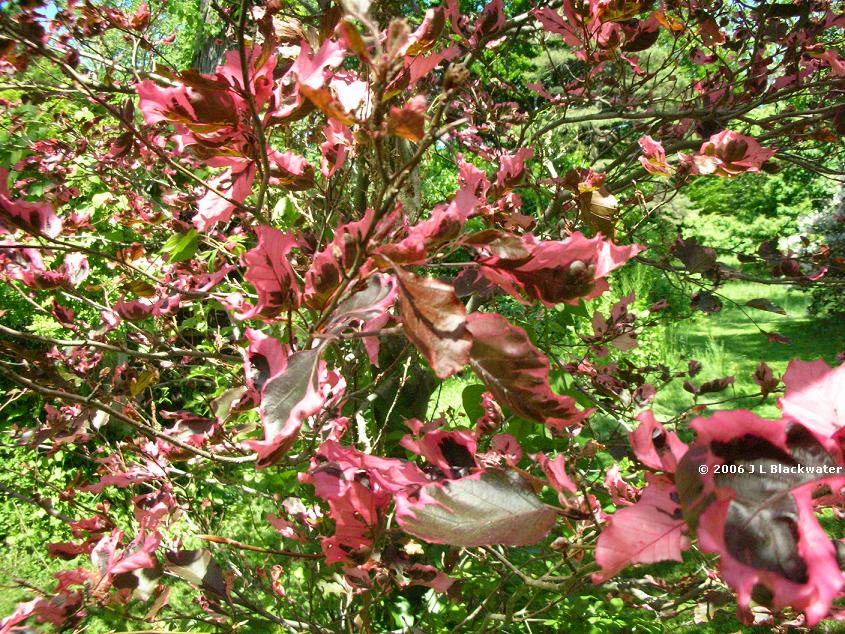
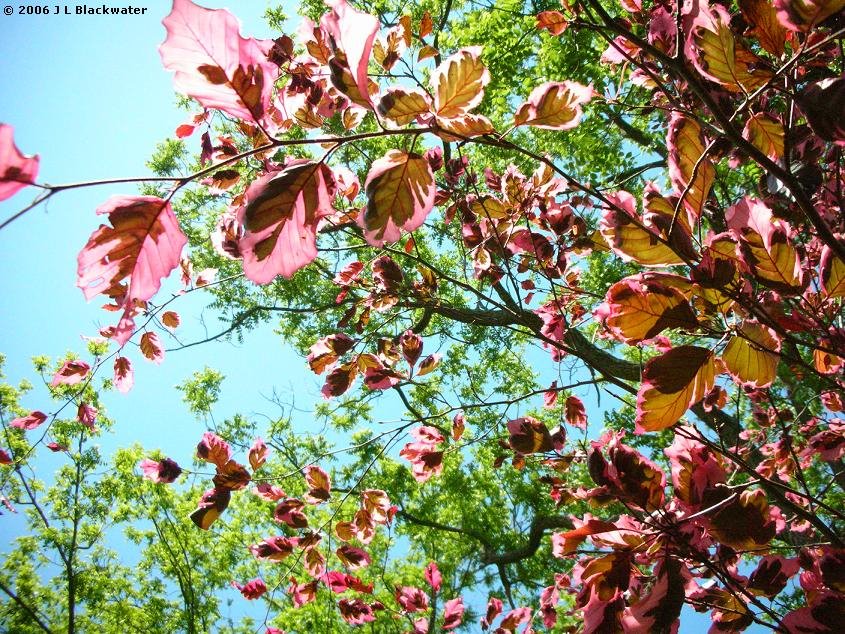
The Tricolor beech tree in today’s images is a young specimen planted here at the farm. It’s having a bit of a tough time, possibly owing to the Black walnuts (Juglans nigra) towering overhead. (Black walnuts are well-known for their allelopathic qualities, and are toxic to many neighboring plants).
Tricolor beech trees usually include green, white, and pink variegation on their leaves. Other variegated beeches include the cultivars ‘Albovariegata’ and ‘Luteovariegata’. While not specific to the Tricolor beech, The Audubon Society Field Guide to North American Trees says Fagus sylvatica “tolerates most soils, best in calcareous or deep sandy loam; hardy in cool, moist temperate regions.”
The Audubon Field Guide also mentions that “the words beech and book come from the same root, because ancient Saxons and Germans wrote on pieces of beech board.”
If you have questions, suggestions, or other thoughts on growing the Tricolor beech, be sure to share with us in the comments!
_______________________________________
Source information:
Little, Elbert L. 1980. The Audubon Society Field Guide to North American Trees: Eastern Region. New York: Alfred A. Knopf.
More, David and John White. 2002. The Illustrated Encyclopedia of Trees. Portland: Timber Press. p. 341.



 Follow Jade Blackwater on Twitter
 Arboreality Feedburner